Primer and Putty: Set the Floor Correctly Before Painting, Make the Result Permanent
If there is anything as important as "good paint" in boat maintenance, it is the right surface preparation. Gloss, durability and longevity are often gained in the primer and putty steps before the topcoat products. If the surface preparation is not done correctly, the paint/varnish may lose adhesion in a short time, leave marks, blister or wear prematurely. Therefore, primer and putty should not be considered as "extra work", but as the basic condition for a quality result.
What is a primer for?
- Supports adhesion: Creates a healthier base for the top coat of paint/varnish.
- Stabilizes the surface: Stabilizes absorbency and helps to create a more homogeneous layer.
- Provides system compatibility: In the manufacturer's system logic, the primer determines the performance of subsequent layers.
What is putty for?
- Correction and filling: Helps to correct pits, scratches, small cracks and surface imperfections.
- Tidies up the form: A smooth surface before paint/varnish means cleaner workmanship and better appearance.
- Provides application control: The surface preparation becomes clear when shaped with sandpaper.
The right sequence: Surface preparation before paint/varnish
To get the best results with primer and putty, the "sequence" is important. The general approach proceeds as follows:
- Cleaning and purification: The surface must be free of salt, oil, dirt and debris.
- Sanding: Prepare the surface to improve adhesion.
- Putty/filler (if necessary): Filling imperfections and correcting the form.
- Intermediate sanding: To adjust the surface for smoothness and homogeneity.
- Primer: Setting the right base for the top coat.
- Intermediate sanding (if necessary): Smoothness before topcoat.
- Top coat application: Paint/varnish/coating.
Think by surface: Fiber, metal, wood
The most critical point in primer/paste selection is the type of surface to be applied and its compatibility with the topcoat product. Needs may vary on fiber (gelcoat), metal or wood surfaces. For this reason, it is healthier to determine the application scenario and act according to system compatibility rather than a "one product fits all" approach.
Complements that make your job easier in practice
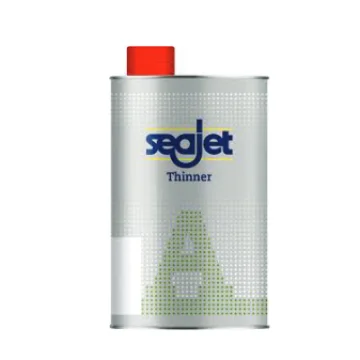
Application equipment and preparation materials are important for a clean workmanship: Varnish / Sandpaper / Thinner on the sandpaper and thinner/cleaner side, Brush - Roller Equipment for a smooth layer, Masking Tapes to remove the edge lines cleanly. If you are planning an underwater application, you can also evaluate the Antifouling / Underwater Protection Paints category with a system logic after surface preparation.
Common mistakes
- Application without cleaning the surface sufficiently: May cause adhesion and durability problems.
- Proceeding in the wrong sequence: If the putty/primer steps are skipped, the surface may mark.
- Using incompatible layers: The compatibility of the topcoat product and primer/putty can be critical.
- Loosening sanding discipline: Loss of uniformity and homogeneity may occur.
Summary
Primer and putty are the basic preparatory steps for a long-lasting and clean finish in hull paint/varnish work. With the right surface preparation, the right product match and the right application sequence, the performance of the topcoat improves significantly. Browse the complementary titles according to your needs and get the system right in one go.