What is Antifouling? A Comprehensive Guide to Underwater Protection Paints for Boats
Creatures such as algae, slime (biofilm), mussels and barnacles (shellfish) that form on the underwater surface of the boat cause serious consequences such as loss of speed, increased fuel consumption, vibration and decreased maneuvering performance. In this article, we discuss in detail how antifouling paints, also known as "antifouling paints", work, which type is advantageous in which usage scenario, application steps and common mistakes.
Related product/category pages: Antifouling / Underwater Protection Paints - Primer / Putty - Osmosis Treatment - Protection - Paint Systems - Brush - Roller - Varnish / Sandpaper / Thinner - Masking Tapes - Masks / Gloves
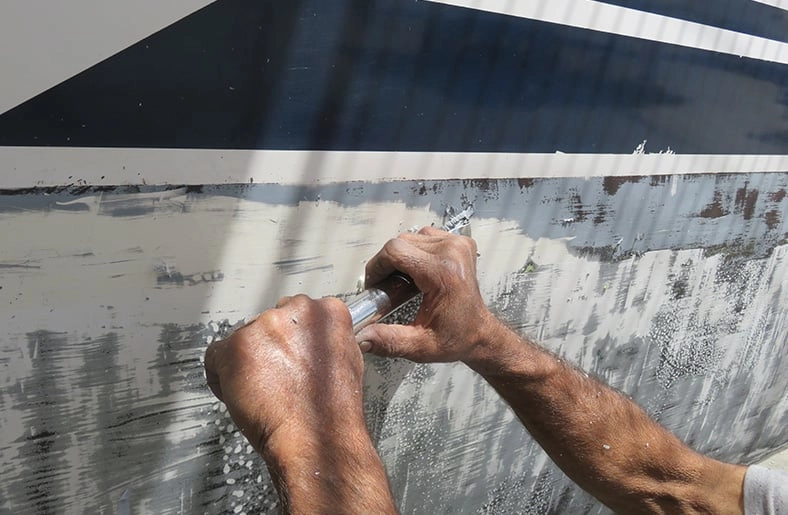
What is Antifouling?
The term "antifouling" is preferred in everyday use for special coatings that may contain biocides to reduce the attachment of organisms on the underwater surface of the boat, or that change the surface chemistry to make it difficult for organisms to attach. Technically, antifouling is also referred to as "underwater protection paint" in practice.
Antifouling is not a "single product"; it is a family of coatingswith different recipes and behaviors according to the usage scenario. If the right product is not selected and the right layer system is not installed, premature fouling or blistering/detachment can occur, even if the paint is expensive.
Why is it so important?
Fouling on the underwater surface is not just a matter of "appearance":
- Fuel consumption increases: The surface becomes rough, friction resistance increases.
- Speed decreases: Lower speed at the same rpm, more noise and vibration.
- Maneuvering performance deteriorates: Fouling around the propeller/shaft affects propulsion.
- Maintenance costs increase: Mid-season diver cleaning, early towing, extra labor.
- Risk of surface damage: Improper cleaning / incorrect paint matching can degrade the coating system.
Especially in warm seas and in the marina where the boat is stationary for a long time, the right choice of antifouling will make the difference felt very clearly.
How Does Antifouling Paint Work?
The main goal of antifouling coatings is to control the biofilm (slime) layer that first forms on the underwater surface and then the larger organisms (algae, crustaceans) that begin to attach. The logic of operation varies according to the product class:
1) Protection by biocide release (leaching)
Some antifouling products have a controlled release of biocides (e.g. copper compounds and/or co-biocides) that make it difficult for organisms to take hold. The critical issues here are: release rate, film thickness and the use profile of the boat. Too fast a release may risk "starting strong but ending quickly", too low a release may risk "early contamination".
2) Self-renewing surface (ablation / self-polishing)
In "ablative" or "self-polishing" types, the paint surface is abraded/renewed in a controlled manner. This results in both a fresh active surface and limited surface roughness. This class can offer more balanced performance throughout the season if chosen correctly.
3) Surface chemistry that makes adhesion difficult (foul-release)
Some systems make it difficult for organisms to "stick" without biocides, with very low surface energy. Even if the organism sticks, it can be separated more easily with boat movement. However, the success of such systems may be more sensitive to speed, frequency of use and the right primer/intermediate coat conditions.
To summarize: There is no rule like "the most toxic is the best". Right system = right paint grade + right surface preparation + right application.
Types of Antifouling and Their Differences
A) Hard Antifouling
Hard antifouling leaves a more durable film on the surface; its self-renewal behavior by abrasion is more limited. It can be advantageous in some usage scenarios:
- If the boat is frequently towed/lowered, the surface may be more tolerant to impact.
- In the propeller/shaft area (if the product is suitable) some users may prefer hard types.
- However, the accumulation of thick layers over consecutive years can increase the risk of "layer blistering/cracking".
B) Ablative (Eroding) Antifouling
Ablative paints produce a fresh surface by controlled abrasion with use and water flow. Overall
- Potential to keep performance more stable throughout the season.
- Abrasion may increase at very high speeds or hard friction (product dependent).
- If the boat is stationary for a long time, "slime" can form faster if the right product is not selected.
C) Self-Polishing Copolymer (SPC) / Self-Polishing Systems
So-called "SPC" systems can "regularly" regenerate the surface on a micro-scale by interacting with the water, both controlling roughness and making biocide release more predictable. Frequently preferred for boats with long seasons and regular use profile.
D) Copper-free / low metal content solutions
In areas of high environmental sensitivity, low metal content or copper-free solutions may be considered. Performance may vary according to regional fouling intensity and maintenance discipline. The most important rule here is to adhere to the area of use and body compatibility on the product label.
E) Foul-Release (Silicone / fluoropolymer based) coatings
It works with the philosophy of "making adhesion difficult" rather than biocide. It requires very smooth surface and correct primer system. If the boat does not move regularly, the expectation of "spontaneous detachment of the attached organism" may not be realistic. Therefore, it is necessary to read the usage profile correctly.
Choosing the Right Paint: Short Decision Guide
There is no single criterion for choosing antifouling. The following questions will help you get closer to the right grade:
1) How much does the boat move?
- Active use a few days a week → Ablative/SPC types can be advantageous.
- Lying in the marina for months → It is necessary to turn to products with strong slime control, whose labeling supports the "long inactive" scenario.
2) What is the character of the water?
- Inwarm and nutrient-laden areas (high algae pressure) more aggressive protection may be required.
- Incolder/cleaner waters, softer solutions may be sufficient.
3) How many months is your season target?
- 3-6 months → Cost-effective ablation systems may work.
- 9-12 months → Layer system, thickness and paint class become more critical.
4) Do you have maintenance discipline?
- If light cleaning/submersible control is planned during the season, more options open up.
- The expectation of "zero intervention" may not be realistic; even the best systems may require maintenance according to the region.
In product selection, headings such as "compatibility / immersion time / overcoating interval" in the manufacturer's technical sheet are as important as the paint name.
Compatibility According to Body Material (Fiber / Steel / Aluminum)
Fiber (GRP) / Polyester bodies
The widest choice of products is usually found on fiber bodies. However, the compatibility of the old paint type with the new paint type may require a tie-coat, especially in transitions such as "ablative on hard".
Steel bodies
Corrosion control in steel is as critical as the paint itself. In underwater systems, epoxy-based barrier coats, suitable primers and antifouling on top are usually considered together. If there is rust/scuffing on the steel, systemic repair is required first. At this point, Epoxy - Fiber Repair and Paint Systems approach gains importance.
Aluminum bodies
Critical risk in aluminum: galvanic corrosion. Some copper-based systems may not be suitable for aluminum surfaces. For this reason, it is necessary to turn to products labeled as "aluminum compatible" and follow the manufacturer's technical data sheet exactly. The wrong choice can lead to expensive damage in the long run.
Note Material compatibility varies per product. The safest approach is to check the "suitable surfaces" section in the product description during the selection phase.
Pre-Application Preparation: 70% of Success
The most common cause of poor antifouling performance is not "incorrect application" but poor surface preparation. The following steps are a good basis for most boats:
1) Tow the boat - pressure wash
Pressure washing immediately after landing removes the slime most easily at this stage. The biofilm hardens as you wait.
2) Analyze the condition of the old paint
- If it'ssolid and attached: most of the time a good sanding + cleaning may be sufficient.
- Ifit is blistered/cracked layer by layer: local or complete removal may be necessary.
- Ifincompatible layers are suspected: plan binder/intermediate coat.
3) Osmosis and moisture control
If there is a suspicion of "osmosis bubbles" in the fiber body, painting only from the top can hide the problem. In this case, it would be better to plan a barrier floor with the Osmosis Treatment - Protection approach.
4) Abrasive and surface profile
The aim is to remove the gloss and create mechanical adhesion for the paint. Overly aggressive sanding, especially if the old layers are weak, can initiate detachment underneath. For suitable abrasives and consumables, the options in the Varnish / Abrasive / Thinner category make your job easier.
5) Masking and detail preparation
Proper masking in sensitive areas such as the water cut line, trim tabs, shaft seals, transducer areas, etc. provides both aesthetics and ease of maintenance. Masking Tapes make the difference here.
Application Steps: Number of Plies, Roll, Thickness, Timing
1) Choosing the right equipment
- Roller/Brush: Antifouling is usually spread more homogeneously with a roller. You can check the Brush - Roller category for suitable rollers and brushes.
- Mixing: Pigments and actives in antifoulings settle to the bottom. Pre-application and intermittent mixing is essential.
2) Number of floors and the "extra floor" strategy
The number of coats and recommended film thickness should be based on the manufacturer's technical data sheet. In practice, it is a common and useful approach to add extra coats in areas of high wear:
- Leading edge
- Water cut line
- Propeller tunnel/shaft circumference (if applicable)
- Spine and corner turns
3) Waiting and launch window between floors
The "overcoating interval" and "immersion time" for antifoulings vary on a product basis. Too early immersion may increase abrasion before the film is fully formed. Too late immersion may decrease surface activity in some products. Therefore, it is necessary to plan "air temperature / humidity / waiting times" according to the technical sheet.
4) When is a primer / tie-coat required?
If the type of old paint is unknown, paint compatibility is questionable or there are problematic areas on the surface; a suitable primer or tie-coat system "guarantees" things. At this stage, products in the Primer / Putty and Paint Systems categories come into play.
5) Occupational safety and environment
Antifouling application requires serious attention due to the dust, solvent and biocide content. It is important to use personal protective equipment (safety equipment):
- Suitable mask/respirator
- Chemical resistant gloves
- Coveralls and eye protection
For this type of equipment, the Masks / Gloves category will do the job. Sanding dust and paint waste must be disposed of in accordance with local regulations.
In-Season Maintenance and Cleaning
Although antifouling can be considered a "maintenance free" product, proper and gentle maintenance can significantly improve performance:
- Slime control: Gentle cleaning with very soft brushes or appropriate equipment can delay biofilm buildup.
- Aggressive scraping: Unnecessary abrasion, especially with ablative/SPC types, shortens season life.
- Regular inspection: Propeller surrounds, trim tab, transducer areas can become fouled faster.
It is also important to clean the superstructure of the boat during the season and to choose the right chemical. The Cleaning Chemicals and Cleaning Supplies categories help with this.
Most Common Errors and Solutions
1) Paint peels / flakes off
- Probable cause: Insufficient sanding, dirty surface, mismatched layer, wrong primer.
- Solution: Stabilize/remove the weak layer, create the right surface profile, use a binder coat if necessary.
2) Paint holds but mosses too quickly
- Possible cause: Wrong antifouling grade, too long inactive use, insufficient film thickness, wrong launch time.
- Solution: Choose a product according to your usage profile; apply extra coats in critical areas; follow the times in the technical sheet.
3) Layer build-up and cracking
- Probable cause: Accumulation of hard type over many years without dismantling.
- Solution: Periodic controlled dismantling/leveling; reinstalling the system.
4) "I use the same paint every year, it didn't work this year"
- Probable cause: Increased localized fouling pressure, less movement of the boat, change in application conditions (temperature/humidity).
- Solution: Switch to a more suitable "zone/performance" product in the same class or strengthen the tier/thickness plan.
Frequently Asked Questions
How often should antifouling paint be renewed?
There is no "one right". The region, duration of use, paint class and application thickness are decisive. Some boats renew every season; some can plan for longer intervals with the right system. The healthiest approach is to examine the surface at the end of the season and determine the layering strategy for the next season.
Can new paint be applied over old paint?
In most cases yes, but the critical condition is: the surface must be sound, sanded correctly and paint compatibility confirmed. If there is a suspicion of incompatibility, the use of a tie-coat makes things safer.
What is the most critical detail in antifouling application?
"Right film thickness + right timing" is usually decisive. Too thin coat shortens the protection. Wrong coat interval/wrong launching can disrupt the working character of the paint.
What should I pay attention to in terms of the environment?
Antifouling products can have inherently sensitive ingredients. It is important to read the label and safety data sheet (SDS), control abrasive dust and dispose of waste properly. Also, in some areas there may be local restrictions affecting product selection; it is necessary to follow marina/local regulatory guidelines.