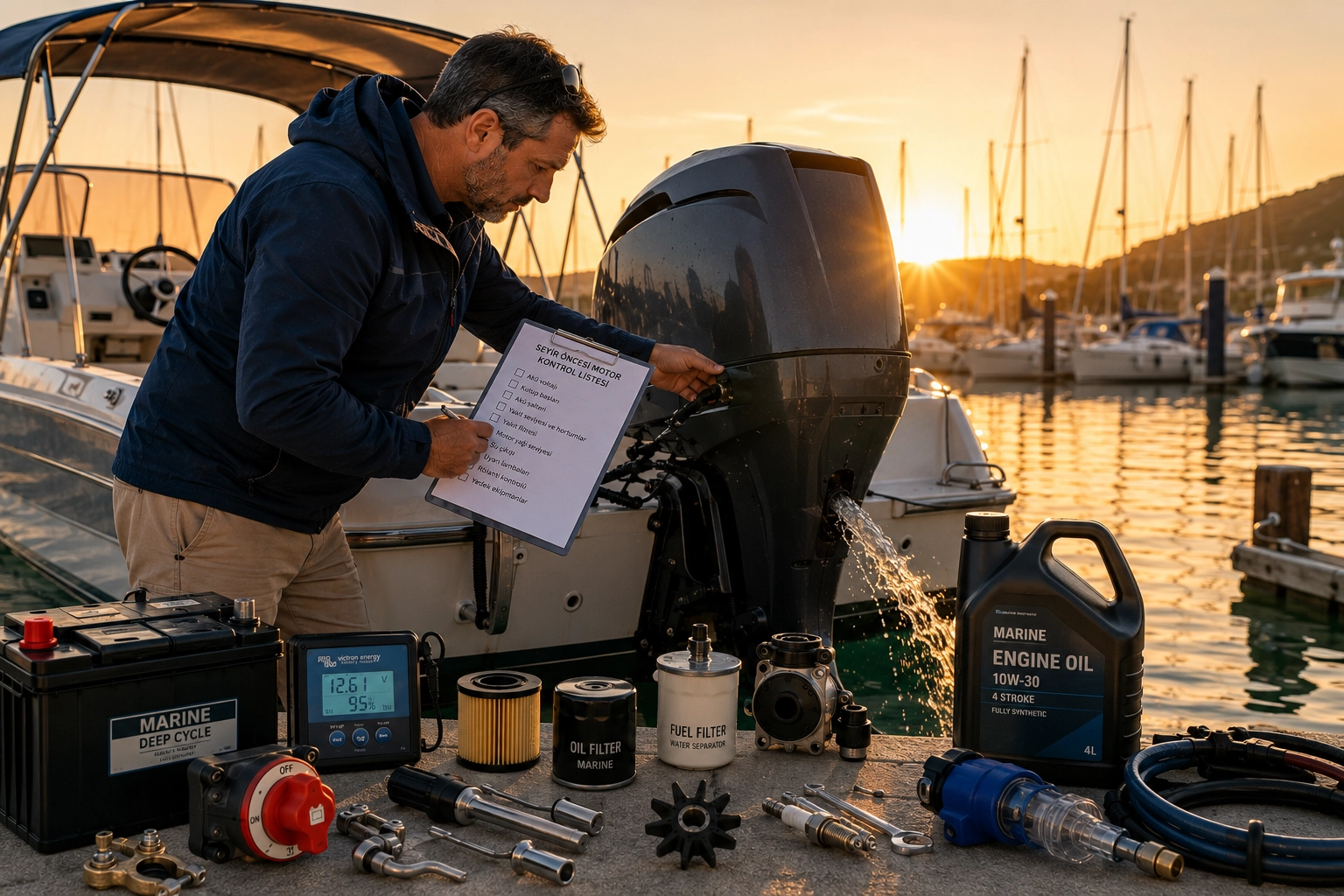
Boat Engine Won't Start? 15 Common Reasons and How to Troubleshoot Them

Reading Time: Approximately 18–22 Minutes
The sun has just begun to rise over the marina. A gentle breeze rocks the dock lines as the boats quietly sway in their berths. After days of planning, today is finally the day for your trip on the water.
Life jackets are on board, provisions are packed, the weather forecast looks promising, and your route has been carefully planned.
There is only one thing left to do.
Turn the ignition key.
Instead of the familiar sound of your engine coming to life... there is only silence.
Maybe a single clicking sound. Perhaps the starter motor struggles to turn. Or maybe nothing happens at all.
Within seconds, countless questions begin running through your mind.
Is the battery dead? Is fuel not reaching the engine? Has something serious failed? Is today's trip already over?
The good news is that many boat engine starting problems are caused by relatively simple issues. By following a logical troubleshooting process, you can often identify the cause in just a few minutes—sometimes without needing professional assistance.
"The most expensive repair on a boat is often the one that begins with the wrong diagnosis."
In this guide, you'll learn how to diagnose a boat engine that won't start, what to check first, which problems you may be able to solve yourself, and when it's time to call a qualified marine technician.
One-Minute Summary
A boat engine refusing to start does not automatically mean a major mechanical failure. In many cases, the problem is caused by a weak battery, loose battery terminals, a clogged fuel filter, worn spark plugs, a fuel delivery issue, or a simple fault within the cooling system.
This guide follows the same troubleshooting sequence used by experienced boat owners and marine mechanics—starting with the easiest and most common causes before moving on to more technical inspections.
🚨 Quick Diagnostic Guide
| Symptom | Check First |
|---|---|
| No sound at all | Battery, battery terminals, battery switch |
| Single clicking sound | Battery voltage or starter system |
| Starter turns but engine won't fire | Fuel system or spark plugs |
| Engine starts but stalls shortly after | Fuel filter or fuel supply |
| No cooling water coming out | Impeller and cooling system |
| Engine overheating | Water pump and cooling circuit |
Editor's Note
This guide has been prepared using the most common troubleshooting procedures for both gasoline and diesel marine engines. It is designed to help boat owners identify common problems safely before they become major failures. If you suspect significant electrical, fuel, or internal mechanical damage, always seek assistance from a qualified marine service professional.
1. If Your Boat Engine Shows No Response, Start with the Electrical System
When a boat engine refuses to start, many owners immediately assume the engine itself has suffered a serious mechanical failure.
In reality, experienced marine technicians know that a large percentage of starting problems originate in the boat's electrical system rather than inside the engine.
If you turn the key and absolutely nothing happens—no dashboard lights, no starter motor, not even a clicking sound—the first place to investigate is the electrical supply.
The good news is that most electrical issues can be identified within minutes using a logical inspection process.
Nothing Happens When You Turn the Key?
A completely silent engine usually means electrical power is not reaching the starter system.
Before suspecting expensive engine damage, work through the following checks in order. Skipping basic inspections often leads to unnecessary parts replacement and wasted time.
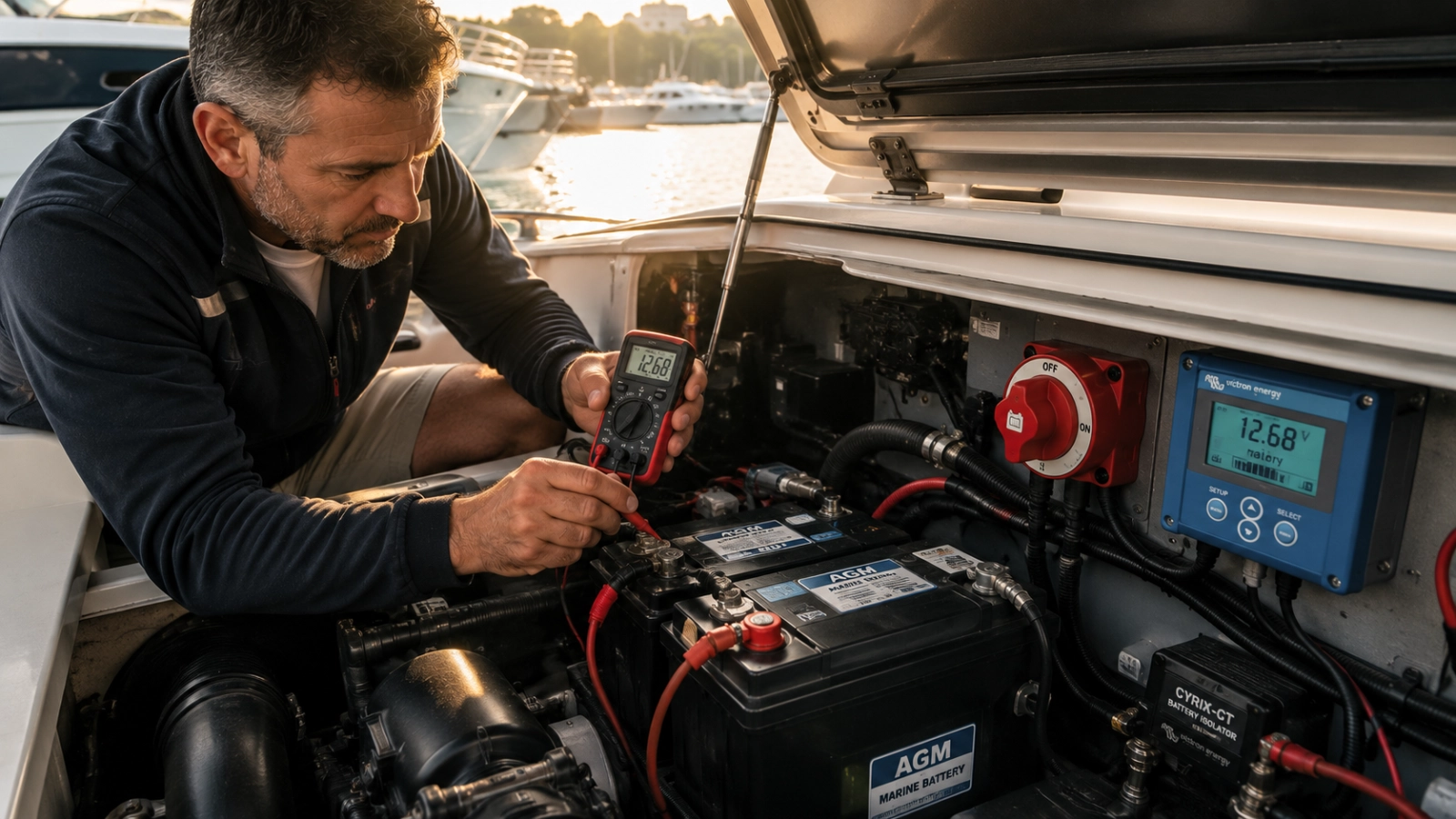
Check the Battery First
Marine batteries naturally lose charge over time, especially during winter storage or long periods without use.
Even a battery that appears healthy may no longer have enough cranking power to turn the starter motor under load.
If your battery is several years old or you haven't checked its voltage recently, this should always be your first inspection.
Recommended Products:
Marine Batteries
Inspect the Battery Terminals
Saltwater, humidity, and vibration create the perfect environment for corrosion.
Even a thin layer of oxidation on battery terminals can dramatically reduce current flow to the starter motor.
Look for white powder, green corrosion, loose cable connections, or damaged terminal clamps. Cleaning and tightening these connections often restores normal starting performance.
Recommended Products:
Battery Terminals
Is the Battery Switch Turned On?
It may sound obvious, but one of the most common causes of a "dead" boat is simply a battery switch left in the OFF position after maintenance or winter storage.
Before investigating more complex problems, confirm that the battery isolation switch is fully engaged and inspect it for signs of heat damage or loose wiring.
Recommended Products:
Battery Switches
Monitor Your Battery Health Before Problems Appear
Most battery failures don't happen overnight.
Voltage usually drops gradually over days or weeks, providing early warning signs before the engine eventually refuses to start.
Installing a battery monitoring system allows you to track voltage, charging performance, and battery condition in real time, helping prevent unexpected starting failures while you're on the water.
Recommended Products:
Victron Battery Monitoring Systems
Boats with Dual Batteries Should Also Check the Isolator
Many recreational boats use separate batteries for engine starting and onboard electrical equipment.
If the battery isolator fails, one battery may not charge correctly, eventually leading to unexpected starting problems.
If your boat is equipped with a dual-battery setup, inspect not only the batteries themselves but also the isolator and its wiring.
Recommended Products:
Battery Isolators
📌 Key Takeaways
- When the engine shows no response, always begin with the electrical system.
- Check battery voltage before assuming a mechanical failure.
- Inspect battery terminals for corrosion and loose connections.
- Verify that the battery switch is in the correct position.
- Monitor battery health regularly using a marine battery monitoring system.
- If your boat has two batteries, inspect the battery isolator as well.
DJ-Editorial Tip: Professional marine mechanics rarely begin by dismantling the engine. They start with the simplest and most likely causes first. Following the same step-by-step approach saves time, money, and unnecessary repairs.
2. The Starter Motor Turns, but the Engine Still Won't Start
You've completed the basic electrical checks.
The battery is fully charged, the terminals are clean, the battery switch is on, and the starter motor cranks the engine with confidence.
Yet the engine refuses to come to life.
At this stage, the electrical system has already done most of its job. The problem is now more likely related to one of the three essential elements every internal combustion engine needs:
- Fuel
- Air
- Ignition (for gasoline engines)
If any one of these is missing—or unable to perform properly—the engine may crank normally without ever starting.
Fuel in the Tank Doesn't Always Mean Fuel Reaches the Engine
One of the most common assumptions among boat owners is that a full fuel tank automatically means the fuel system is working correctly.
Unfortunately, that's not always the case.
Marine fuel systems operate in a harsh environment where heat, moisture, vibration, and salt air gradually affect hoses, fittings, primer bulbs, and fuel lines.
Even a tiny air leak or partially restricted fuel hose can prevent enough fuel from reaching the engine during starting.
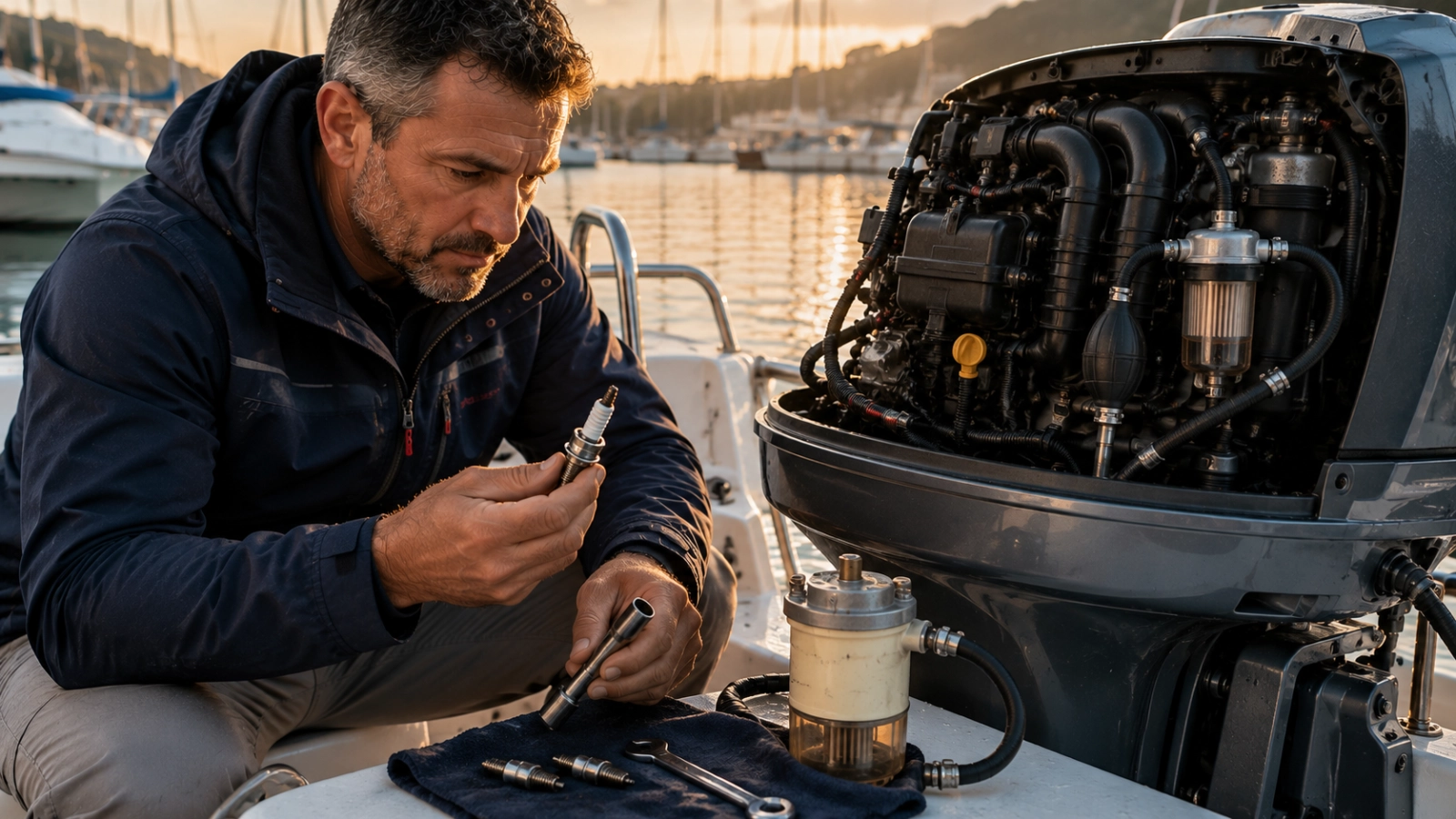
Before moving on to more complicated diagnostics, visually inspect the entire fuel line from the fuel tank to the engine. Look for cracked hoses, loose clamps, damaged primer bulbs, or signs of fuel leakage.
Recommended Products:
Marine Fuel System Components
A Clogged Fuel Filter Can Stop an Engine Before It Even Starts
Fuel filters are designed to trap dirt, water, rust particles, and other contaminants before they reach the engine.
As the filter gradually becomes restricted, fuel flow decreases. The starter motor may continue cranking normally, but the engine simply won't receive enough fuel to ignite.
In many cases, replacing an inexpensive fuel filter solves what initially appears to be a much larger mechanical problem.
If your boat has been sitting unused for several months, inspecting the fuel filter should be one of your highest priorities.
Recommended Products:
Marine Oil & Fuel Filters
Don't Forget the Spark Plugs
For gasoline outboard engines, spark plugs are responsible for igniting the air-fuel mixture inside each cylinder.
Even if fuel reaches the engine perfectly, worn or fouled spark plugs can prevent combustion from taking place.
Typical warning signs include:
- Hard starting
- Intermittent misfires
- Rough idle
- Poor throttle response
- Higher fuel consumption
Remove the spark plugs and inspect their condition. Heavy carbon deposits, oil contamination, cracked ceramic insulation, or worn electrodes are all signs that replacement may be necessary.
Recommended Products:
Marine Spark Plugs
Old Fuel Can Cause New Problems
Fuel naturally degrades over time, especially when a boat has been stored for months without use.
Modern gasoline blends containing ethanol absorb moisture more easily, increasing the risk of water contamination and fuel separation.
Old or contaminated fuel often causes difficult starting, rough running, and poor engine performance.
Before launching for a new season, inspect the condition of the fuel and replace it if there is any doubt about its quality.
Follow the Fuel Path, Not Random Guesses
When an engine cranks but refuses to start, avoid replacing parts at random.
Instead, think like a marine technician.
Trace the fuel's journey—from the fuel tank, through the hoses, primer bulb, fuel filter, and finally into the engine.
A systematic inspection almost always reveals the real cause faster than guesswork.
📌 Key Takeaways
- If the starter motor turns normally, the electrical system is likely functioning correctly.
- Inspect the entire fuel delivery system before suspecting major engine damage.
- Replace clogged fuel filters at the recommended service intervals.
- Check spark plugs for wear, carbon buildup, or contamination.
- Never overlook the condition of old or stale fuel after long-term storage.
DJ-Editorial Tip: Marine engines rely on a simple principle: fuel, air, and ignition. When one of these three elements is missing, the engine won't start—no matter how healthy everything else appears. Diagnose each system methodically instead of replacing parts by trial and error.
3. The Engine Starts... Then Suddenly Stalls
You finally get the engine running.
Relieved, you cast off the dock lines and begin leaving the marina behind. Everything seems normal for the first few minutes.
Then something changes.
The engine begins to lose RPM. It hesitates when you apply throttle. The idle becomes rough. Moments later, the engine shuts down completely.
Few situations are more frustrating on the water than an engine that starts perfectly but refuses to stay running.
Unlike a complete no-start condition, this type of problem usually indicates that the engine can operate—but cannot continue doing so consistently.
In most cases, the cause is related to fuel delivery, routine maintenance, or the engine's operating condition rather than a catastrophic mechanical failure.
Is Fuel Reaching the Engine Continuously?
An engine may initially start using the fuel already present in the carburetor or fuel rail.
However, once that supply is consumed, the engine depends entirely on a steady flow of fresh fuel from the tank.
If fuel delivery becomes restricted, the engine may begin running rough before eventually stalling.
Inspect the primer bulb, fuel hoses, hose clamps, connectors, and fuel lines for signs of wear, cracking, or air leaks.
Even a small leak can interrupt fuel flow enough to stop the engine under load.
Recommended Products:
Marine Fuel System Components
When Was the Last Time You Replaced the Fuel Filter?
Fuel filters gradually collect water, dirt, rust particles, and other contaminants.
During light engine operation, a partially clogged filter may still allow enough fuel to pass.
Once throttle demand increases, however, the restricted filter may no longer deliver sufficient fuel, causing hesitation, power loss, and eventually engine shutdown.
Replacing the fuel filter at the recommended service interval is one of the simplest ways to prevent unexpected stalling on the water.
Recommended Products:
Marine Oil & Fuel Filters
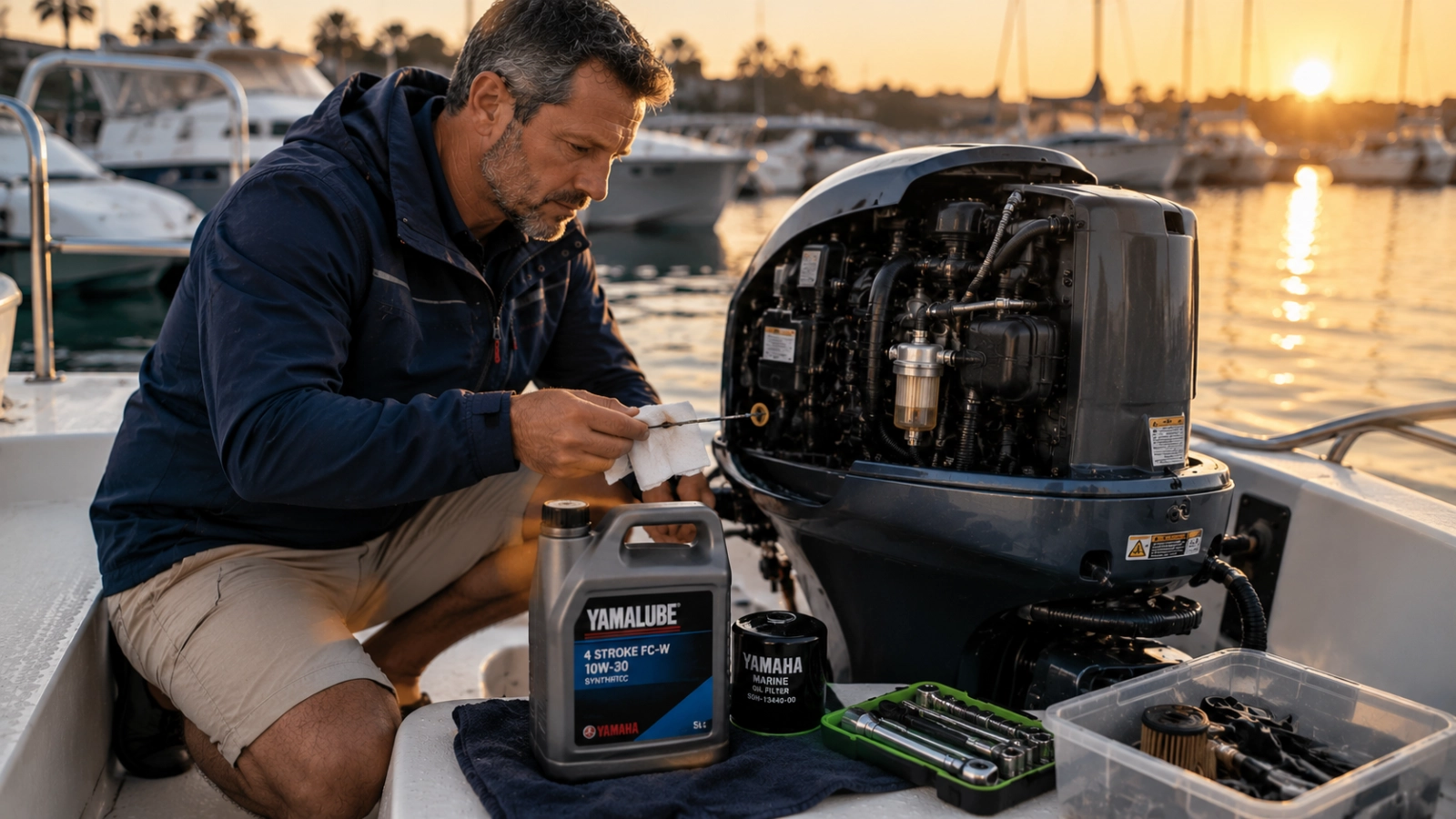
Engine Oil Does More Than Lubricate
Many boat owners think of engine oil as nothing more than a lubricant.
In reality, quality marine engine oil performs several critical functions. It reduces friction, helps transfer heat away from internal components, protects against corrosion, suspends contaminants, and contributes to smoother engine operation.
Old, contaminated, or incorrect engine oil can negatively affect both performance and long-term engine reliability.
Changing the oil before each boating season is one of the best investments you can make in your engine.
Recommended Products:
Marine Engine Oils
Don't Overlook Mechanical Wear
Marine engines operate in one of the harshest environments imaginable.
Constant vibration, humidity, saltwater exposure, and temperature changes gradually affect mechanical components throughout the engine.
Loose fasteners, aging seals, worn belts, deteriorated hoses, and other small issues can eventually lead to unstable engine operation.
Routine inspections help identify these problems long before they become expensive repairs.
Recommended Products:
Marine Engine Parts
The Engine Usually Warns You Before It Stops
Boat engines rarely fail without warning.
Most develop noticeable symptoms before shutting down completely.
- Rough or unstable idle
- Engine hesitation during acceleration
- Loss of power
- Changes in engine sound
- Higher-than-normal fuel consumption
- Occasional misfires
Recognizing these warning signs early gives you the opportunity to correct the problem before it leaves you stranded offshore.
Preventive Maintenance Is Always Less Expensive Than Emergency Repairs
Many owners wait until something breaks before servicing their engine.
Professional captains take the opposite approach.
Routine maintenance isn't simply about extending engine life—it's about increasing reliability every time you leave the dock.
Replacing filters, changing engine oil, inspecting fuel lines, and checking mechanical components on schedule dramatically reduces the likelihood of unexpected engine failure.
📌 Key Takeaways
- An engine that starts but later stalls is often suffering from restricted fuel delivery.
- Inspect fuel hoses, primer bulbs, and connections for leaks or damage.
- Replace fuel filters before they become heavily restricted.
- Use the correct marine engine oil and follow recommended service intervals.
- Routine inspection of mechanical components helps prevent unexpected breakdowns.
DJ-Editorial Tip: Boat engines almost always provide warning signs before a major failure occurs. Learning to recognize those early symptoms can save your boating trip—and potentially thousands of dollars in repairs.
4. If Your Outboard Engine Isn't Pumping Water, Stop Immediately
The engine is finally running smoothly.
You've left the marina behind, the throttle is set, and the boat begins cutting effortlessly through calm water.
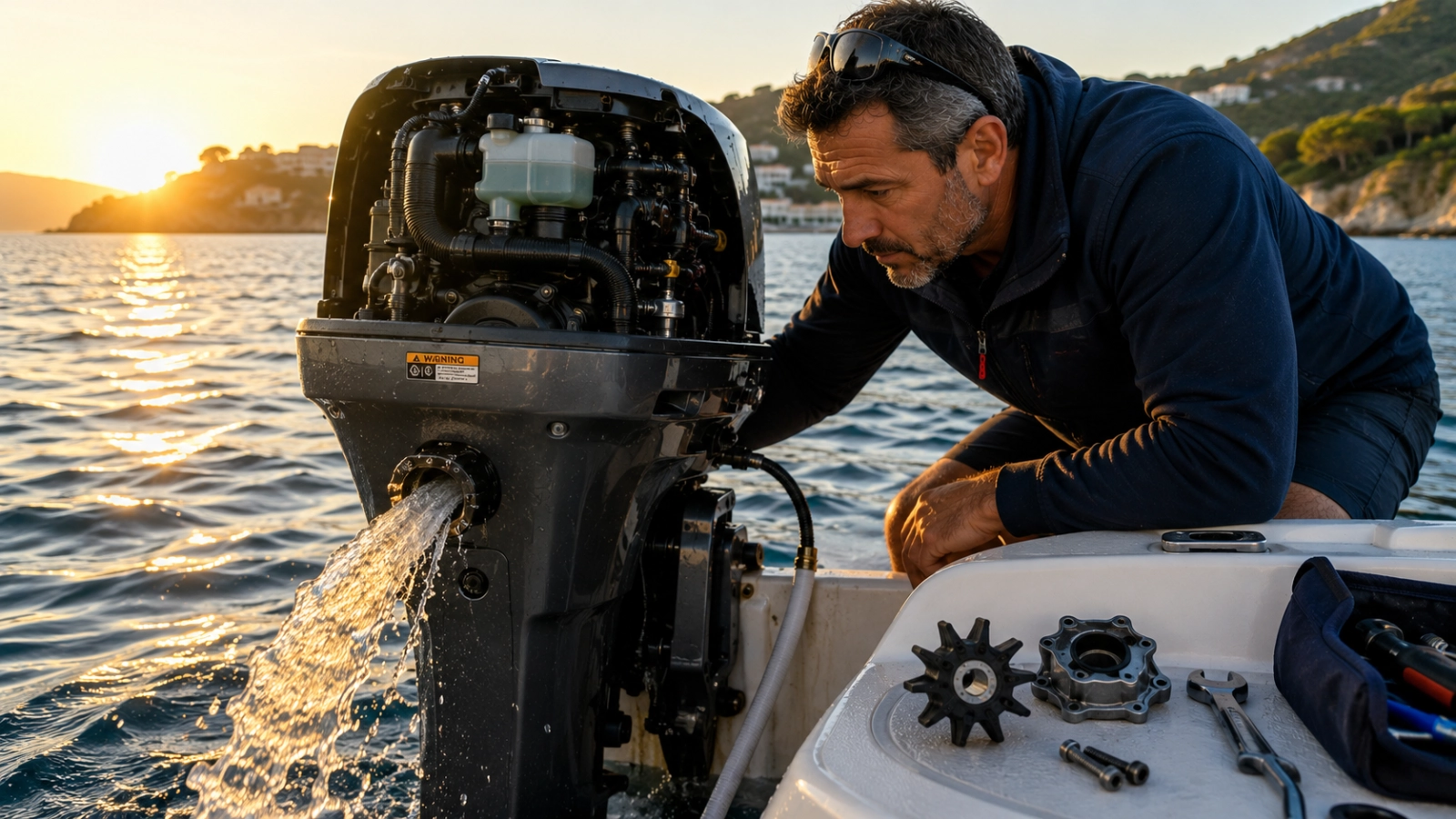
Almost instinctively, you glance toward the small stream of cooling water flowing from the outboard.
But something isn't right.
The tell-tale stream is weaker than usual... or perhaps it has disappeared altogether.
This is one of the most important warning signs any boat owner should recognize.
An outboard engine that is no longer pumping cooling water can overheat within minutes, potentially causing severe internal engine damage if operation continues.
How Does an Outboard Engine Stay Cool?
Unlike most automobiles, the majority of outboard engines use the surrounding water for cooling.
As the engine runs, a flexible impeller inside the water pump draws water through intake ports located on the lower unit.
That water circulates throughout the engine, absorbing heat before exiting through the tell-tale outlet and exhaust system.
The small stream of water visible behind your engine isn't simply excess water—it's one of the easiest indicators that the cooling system is functioning properly.
The Tell-Tale Stream Is More Important Than Many Owners Realize
Experienced boaters often check the cooling water stream within seconds of starting the engine.
A healthy, steady stream usually indicates that water is circulating correctly through the cooling passages.
If the stream becomes weak, intermittent, or disappears completely, treat the situation seriously.
Continuing to operate the engine without proper cooling can quickly lead to overheating, damaged seals, warped components, or even complete engine failure.
The Impeller: A Small Part with a Critical Job
The impeller is a small rubber rotor fitted with flexible vanes inside the engine's water pump.
Although inexpensive, it performs one of the most important tasks in the entire engine.
Its job is to draw cooling water from outside the boat and circulate it through the engine continuously.
Over time, rubber vanes naturally wear, harden, crack, or break.
Running an outboard engine without water—even for a short period—can permanently damage the impeller within minutes.
For this reason, routine impeller inspection and replacement are considered essential preventive maintenance by marine professionals.
Recommended Products:
Outboard Engine Impellers
Watch for Early Signs of Overheating
Most marine engines provide several warning signs before overheating becomes critical.
- A weak or interrupted tell-tale water stream
- Increasing engine temperature
- Reduced engine performance
- Warning lights or audible alarms
- A burning smell coming from the engine
- Steam around the powerhead
If any of these symptoms appear, reduce throttle immediately and investigate the cooling system before continuing your trip.
Flush Your Engine After Every Saltwater Trip
Saltwater contains minerals, salt crystals, sand, and other contaminants that gradually accumulate inside the cooling passages.
Without regular flushing, these deposits reduce cooling efficiency and accelerate corrosion throughout the engine.
Using a freshwater flushing attachment after every trip is one of the simplest and most effective ways to extend the life of your outboard engine.
Professional boat owners consider engine flushing part of every boating day—not just seasonal maintenance.
Recommended Products:
Engine Flushing Devices
Your Cooling System Needs Routine Maintenance Too
Many boat owners regularly change engine oil and fuel filters but overlook the cooling system entirely.
The water pump, impeller, seals, hoses, and related engine components all experience wear over time and should be inspected during scheduled maintenance.
Preventive maintenance costs far less than repairing an overheated marine engine.
Recommended Products:
Marine Engine Components
📌 Key Takeaways
- Always check the tell-tale cooling water stream immediately after starting the engine.
- If no cooling water appears, stop operating the engine as soon as it is safe to do so.
- Inspect and replace the impeller at the intervals recommended by your engine manufacturer.
- Flush your outboard with fresh water after every saltwater outing.
- Routine cooling system maintenance greatly reduces the risk of overheating and expensive engine repairs.
DJ-Editorial Tip: The tell-tale stream is one of the smallest details on an outboard engine—but it can provide one of the biggest warnings. Checking it takes only a few seconds and could save you from a catastrophic engine failure miles away from shore.
5. A 10-Point Pre-Departure Engine Inspection Checklist
Many engine failures that occur on the water can be prevented before your boat ever leaves the dock.
Experienced captains understand that reliability begins long before the throttle is advanced. Instead of simply starting the engine and casting off, they follow the same systematic inspection routine before every trip.
The checklist below takes only a few minutes to complete, yet it can significantly reduce the risk of unexpected breakdowns while you're underway.
✅ Pre-Departure Boat Engine Checklist
| Inspection Item | Completed |
|---|---|
| Battery voltage has been checked. | ☐ |
| Battery terminals are clean and corrosion-free. | ☐ |
| Battery switch is in the correct position. | ☐ |
| Fuel level and fuel lines have been inspected. | ☐ |
| Fuel filter is within its recommended service interval. | ☐ |
| Engine oil level has been checked. | ☐ |
| Cooling water (tell-tale) flows normally after starting. | ☐ |
| No warning lights or alarms are active. | ☐ |
| The engine idles smoothly and responds normally to throttle. | ☐ |
| Spare spark plugs and basic maintenance tools are on board. | ☐ |
Routine Maintenance Is an Investment in Safety
Boat engines rarely fail without warning.
Most serious breakdowns begin as small maintenance issues that gradually develop over time. A neglected fuel filter, an aging impeller, low battery voltage, or worn spark plugs may seem insignificant—until they leave you stranded offshore.
Routine maintenance is not simply about extending engine life. It is about protecting your passengers, your time on the water, and your confidence every time you leave the marina.
Simple inspections performed consistently are far less expensive than emergency repairs or towing services.
Recommended Marine Engine Maintenance Categories
Whether you're preparing for the boating season or performing routine maintenance, you'll find a wide selection of marine engine products in the following categories:
- Marine Batteries
- Battery Terminals
- Battery Switches
- Victron Battery Monitoring Systems
- Battery Isolators
- Fuel System Components
- Marine Oil & Fuel Filters
- Marine Spark Plugs
- Marine Engine Oils
- Outboard Engine Impellers
- Engine Flushing Equipment
- Marine Engine Components
Frequently Asked Questions
Why won't my boat engine start?
The most common causes include a discharged battery, corroded battery terminals, fuel delivery problems, clogged fuel filters, worn spark plugs, or faults within the cooling system. A systematic inspection is the fastest way to identify the real cause.
The starter motor turns, but the engine won't fire. What should I check?
Begin by inspecting the fuel system, fuel filter, spark plugs, and fuel quality. If the engine cranks normally, the electrical system is usually functioning correctly.
My outboard isn't pumping water. Is it safe to keep running?
No. Stop the engine as soon as it is safe to do so. A missing or weak tell-tale stream often indicates a cooling system problem, commonly caused by a worn impeller or restricted water flow.
How often should an impeller be replaced?
Replacement intervals vary by manufacturer and operating conditions. Most marine engine manufacturers recommend regular inspection and scheduled replacement as part of routine maintenance.
Final Thoughts
Safe boating doesn't begin when you leave the harbor.
It begins with an engine you can trust.
Learning to recognize early warning signs, performing regular maintenance, and using quality marine components will improve reliability, reduce operating costs, and give you greater confidence every time you head out on the water.
Remember, on the water, preparation is always easier—and far less expensive—than emergency repairs.
Editor's Note: This guide is intended to help boat owners troubleshoot common engine starting and running problems. It does not replace the maintenance procedures recommended by your engine manufacturer. If you suspect significant mechanical or electrical damage, consult a qualified marine technician before operating your vessel.