How Many Liters of Fuel Should My Boat Consume Per Hour? How to Calculate Boat Fuel Consumption
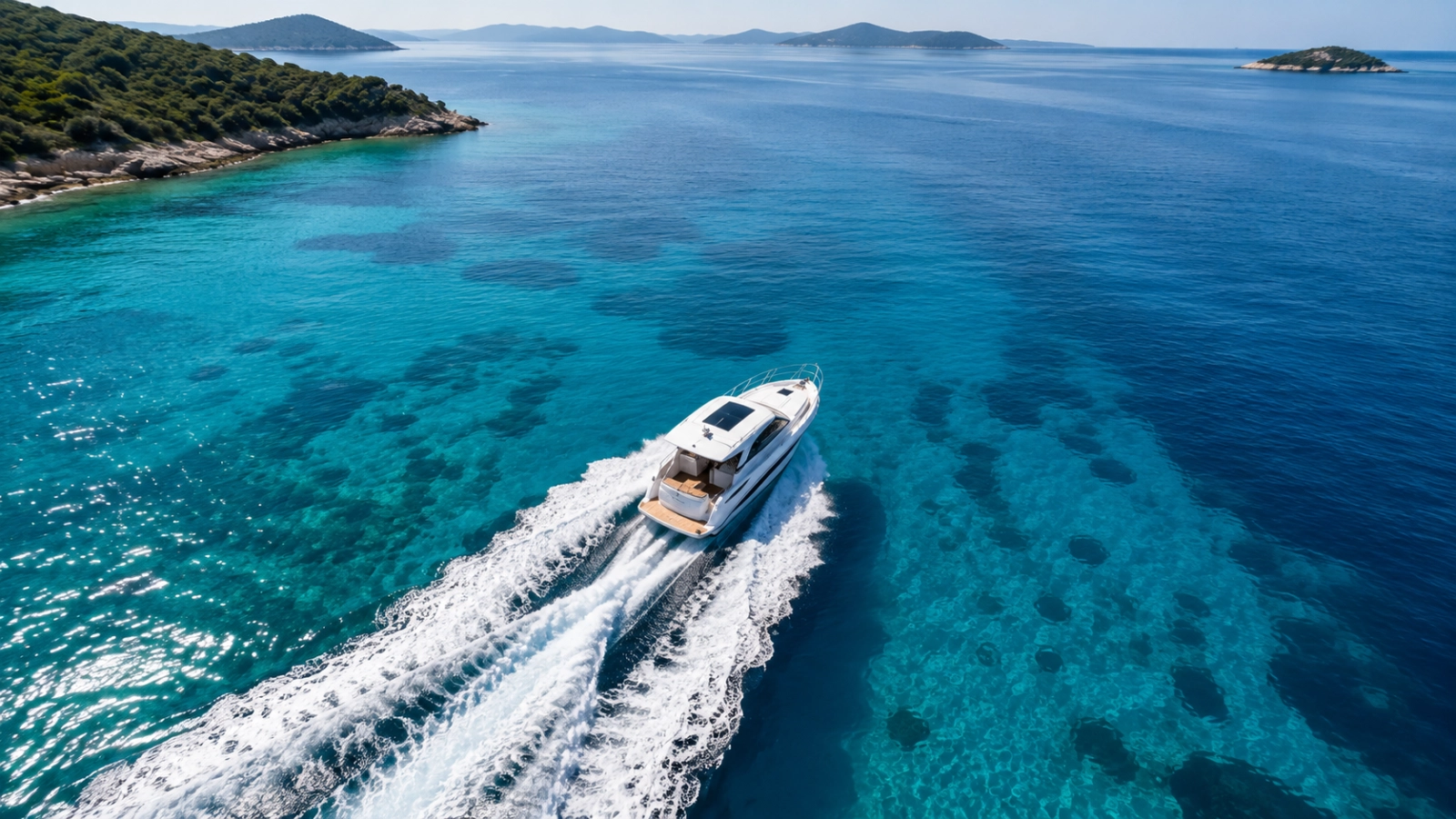 One of the most common questions boat owners ask before heading out on a long voyage is: "How many liters of fuel does my boat consume per hour?" There isn't a single answer to this question because marine engine fuel consumption depends on several factors, including engine power, boat weight, sea conditions, propeller selection, and operating habits.
However, by understanding the key factors that influence fuel consumption, you can estimate your fuel costs more accurately and avoid unnecessary fuel expenses during your trips.
The Most Important Factors That Affect Boat Fuel Consumption
⚓ 1. Engine Power (HP)
As engine horsepower increases, fuel consumption generally rises as well. However, a larger engine does not always consume more fuel. In many cases, a powerful engine running comfortably at lower RPM can be more fuel-efficient than a smaller engine operating continuously at high RPM.
🚤 2. Boat Weight
The total weight of your boat has a direct impact on fuel consumption. Excess equipment, full freshwater tanks, unnecessary cargo, and even water accumulated in the bilge force the engine to work harder, increasing fuel usage.
Water collected in the bilge not only adds extra weight but can also shorten the lifespan of onboard equipment. Keeping the bilge dry is therefore essential. Regular inspections and the use of manual bilge pumps or electric bilge pumps can help maintain a dry and efficient boat.
🌊 3. Hull Cleanliness
Marine growth such as algae, barnacles, and shell buildup increases water resistance. As drag increases, the engine must produce more power to maintain the same speed, resulting in higher fuel consumption.
Routine maintenance and the use of quality antifouling and underwater protection paints help keep the hull clean while improving overall fuel efficiency.
⛽ 4. A Clean Fuel System
Clogged fuel filters, contaminated fuel, or dirt within the fuel system can reduce engine performance. When combustion becomes less efficient, the engine consumes more fuel to cover the same distance.
Replacing fuel filters at regular service intervals and using high-quality marine fuel additives when necessary can help keep the fuel system operating at peak efficiency.
 The Biggest Mistake When Estimating Fuel Consumption
Many boat owners try to estimate hourly fuel consumption based solely on engine horsepower. In reality, two boats with identical engine power can have significantly different fuel consumption due to differences in hull design, onboard load, sea conditions, weather, and operating RPM.
For this reason, engine horsepower should never be considered the only factor. The boat's maintenance condition, loading, and actual operating style must also be taken into account when evaluating fuel consumption.
The best way to reduce fuel consumption is not necessarily to install a smaller engine. Instead, keep your boat well maintained, maintain a clean hull, service the fuel system regularly, and eliminate unnecessary weight. These simple practices can lead to significant fuel savings throughout the boating season.
``` ```html id="fclx72"
Estimated Boat Fuel Consumption Chart (Economical Cruising Speed)
Now let's answer one of the most frequently asked questions: "How many liters of fuel should my boat consume per hour?" While there is no universal answer, the table below provides estimated fuel consumption figures for well-maintained marine engines operating at their most economical cruising RPM.
Please note: Actual fuel consumption varies depending on the engine manufacturer, boat type, hull design, onboard weight, propeller selection, weather, sea conditions, and maintenance status. The values below should be used as a general reference rather than exact specifications.
| Engine Power | Economical Cruising RPM | Estimated Fuel Consumption (Liters/Hour) |
|---|---|---|
| 20 HP | 3,500 - 4,500 RPM | 3 - 5 L/h |
| 40 HP | 3,800 - 4,500 RPM | 6 - 9 L/h |
| 60 HP | 3,800 - 4,700 RPM | 8 - 12 L/h |
| 90 HP | 4,000 - 4,800 RPM | 12 - 18 L/h |
| 115 HP | 4,000 - 5,000 RPM | 16 - 23 L/h |
| 150 HP | 4,200 - 5,000 RPM | 22 - 30 L/h |
| 200 HP | 4,200 - 5,200 RPM | 28 - 40 L/h |
| 250 HP | 4,300 - 5,400 RPM | 35 - 50 L/h |
How to Calculate Your Boat's Actual Fuel Consumption
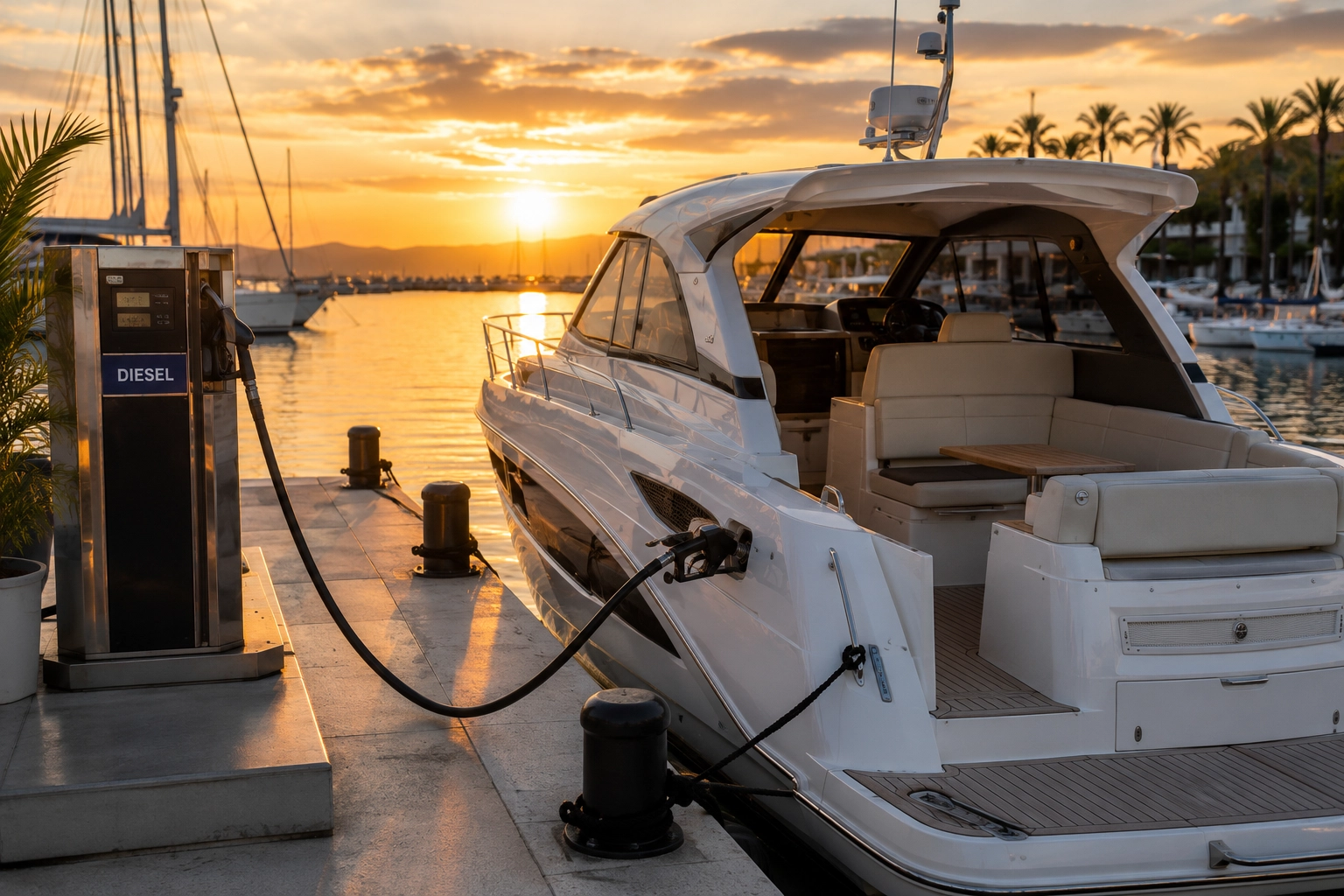
The most accurate way to determine your boat's fuel consumption is by measuring it during normal operation. Fill the fuel tank completely, use the boat as you normally would, and then refill the tank. The amount of fuel added represents the fuel consumed during the trip.
Fuel Consumption (Liters per Hour) =
Fuel Added (Liters) ÷ Engine Running Time (Hours)
For example, if you refill 36 liters after a trip and the engine has operated for 4 hours:
36 ÷ 4 = 9 Liters per Hour
Repeating this calculation over several trips will provide a reliable average fuel consumption figure for your specific boat and operating conditions.
 What to Check If Your Boat Is Consuming Too Much Fuel
- ✓ The fuel filter may be clogged.
- ✓ Marine growth such as algae or barnacles may be increasing hull drag.
- ✓ The propeller may be damaged or incorrectly sized.
- ✓ The engine may require scheduled maintenance.
- ✓ The boat may be carrying unnecessary weight.
- ✓ Poor-quality or contaminated fuel may be affecting engine performance.
Routine maintenance, including timely replacement of fuel filters and the appropriate use of marine fuel additives, can help maintain engine efficiency and reduce unnecessary fuel consumption.
If your boat consistently consumes 20–30% more fuel than the manufacturer's typical performance figures, it is advisable to inspect the engine, fuel system, propeller, and hull condition. Identifying and resolving these issues early can improve both fuel economy and overall engine performance.
``` ```html id="mknr83"
What Is the Most Fuel-Efficient Cruising RPM for a Boat?
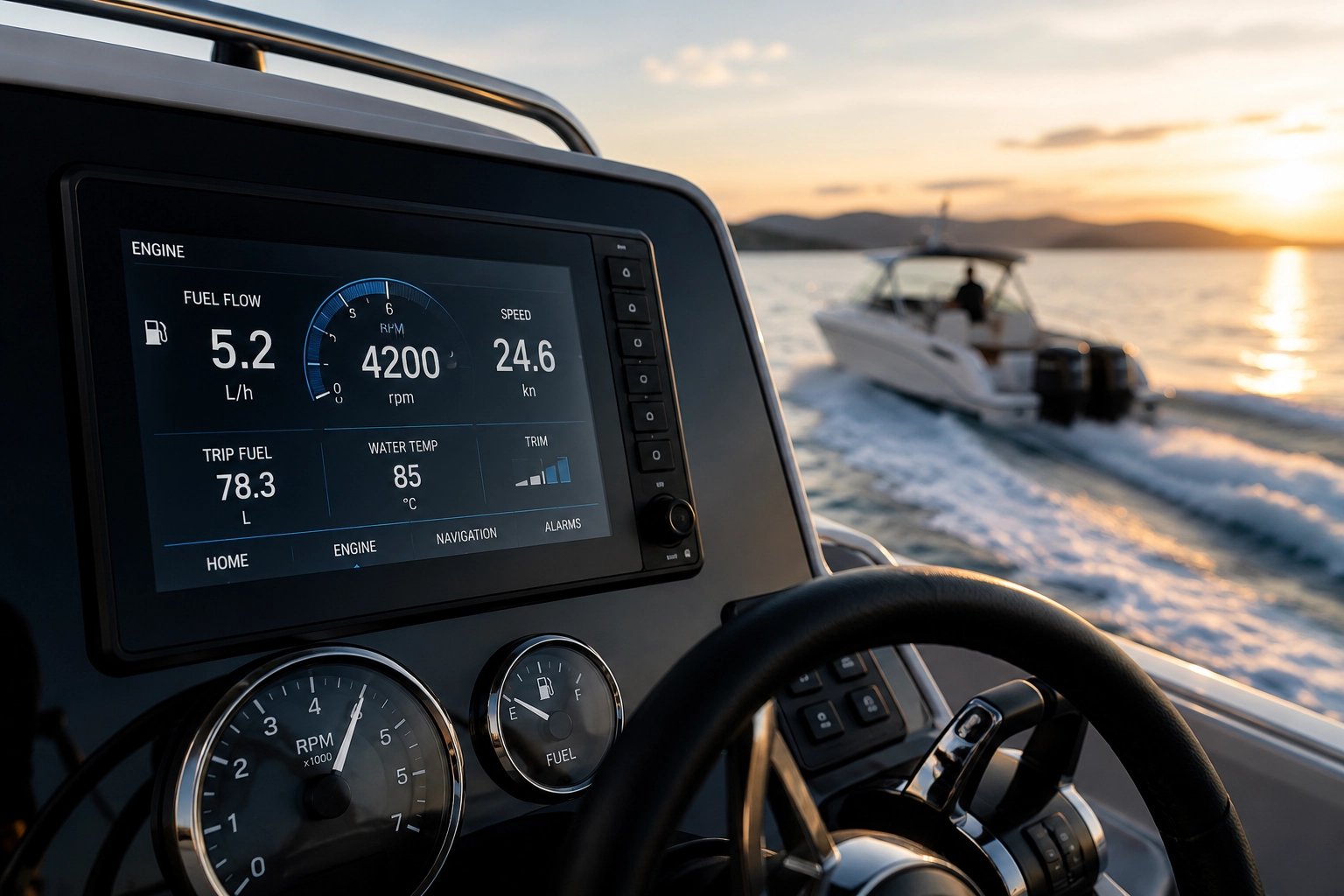
Another common question among boat owners is: "What is the most economical cruising RPM?" The answer is that there is no single RPM that applies to every boat. The ideal cruising RPM depends on your engine's maximum operating speed, the boat's weight, hull design, propeller setup, and sea conditions.
As a general rule, most marine engine manufacturers recommend cruising at approximately 60% to 80% of the engine's maximum RPM during long-distance trips. This range typically offers the best balance between fuel efficiency, engine performance, and long-term reliability.
Recommended Economical Cruising RPM
| Maximum Engine RPM | Recommended Cruising RPM |
|---|---|
| 5,000 RPM | 3,000 - 4,000 RPM |
| 5,500 RPM | 3,300 - 4,400 RPM |
| 6,000 RPM | 3,600 - 4,800 RPM |
Running your boat at full throttle for extended periods rarely saves much travel time, but it can significantly increase fuel consumption and place unnecessary stress on the engine. Maintaining a steady cruising speed within the recommended RPM range usually provides the best fuel economy while extending engine life.
5 Practical Ways to Reduce Boat Fuel Consumption
- Keep the hull clean. Algae, barnacles, and marine growth create additional drag. Applying high-quality antifouling and underwater protection paints helps maintain a cleaner hull and improves fuel efficiency.
- Maintain the fuel system. Replacing fuel filters on schedule and using quality marine fuel additives when appropriate can help keep the engine operating efficiently.
- Reduce unnecessary weight. Extra equipment, unused gear, and excessive cargo increase the workload on the engine and lead to higher fuel consumption.
- Keep the bilge dry. Water accumulated inside the bilge adds weight and may contribute to equipment corrosion. A dry bilge improves both efficiency and onboard safety.
- Avoid aggressive throttle changes. Smooth acceleration and maintaining a consistent cruising speed are among the easiest ways to improve fuel economy during long trips.
 Conclusion
Understanding how many liters of fuel your boat consumes per hour and identifying the most economical cruising RPM are essential steps toward reducing operating costs and improving overall boating efficiency.
Regular maintenance, a clean hull, a healthy fuel system, and responsible throttle management can significantly reduce fuel consumption while extending the service life of your marine engine.
From fuel system maintenance products to antifouling coatings and other essential marine equipment, you can explore a wide range of boating solutions at Denizciden.com.
• There is no universal "perfect RPM" for every boat; the most efficient cruising range is generally 60% to 80% of your engine's maximum RPM.
• Fuel consumption is influenced by engine maintenance, boat weight, hull cleanliness, propeller selection, and sea conditions.
• Proper maintenance and efficient operating habits can noticeably reduce fuel costs while improving your boat's overall performance and reliability.
```