How to Transport a Kayak on Your Car: The Complete Safe Roof Transport Guide (2026)
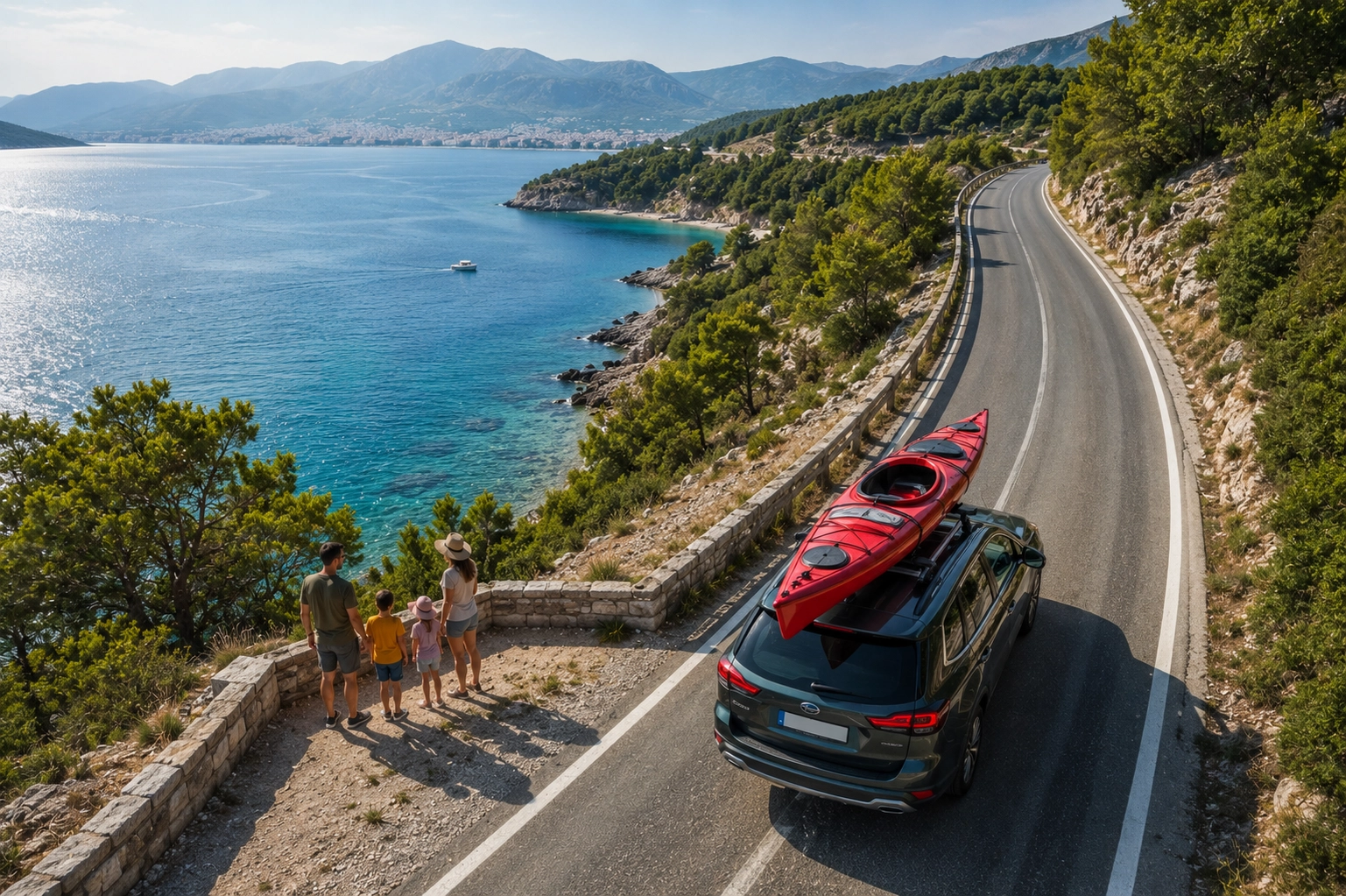
One of the most common questions among kayaking enthusiasts is how to transport a kayak safely on top of a vehicle. Whether you're heading to a nearby lake for a weekend paddle or planning a long coastal road trip, using the correct transportation method is essential for both safety and protecting your kayak.
An improperly secured kayak can shift while driving, damage your vehicle, or even become a serious hazard for other road users. With the right equipment and proper loading techniques, however, transporting a kayak can be safe, simple, and stress-free—even on long-distance journeys.
In this comprehensive guide, you'll learn which equipment you need, how to choose the right roof transportation system, how to secure your kayak correctly, and the most common mistakes to avoid.
🚗 Explore the SEAFLO Car Roof Kayak Loading Assistant
Why Is Proper Kayak Transportation So Important?
Transporting a kayak safely involves much more than placing it on your vehicle and tightening a few straps. During driving, your kayak is exposed to wind pressure, vibration, cornering forces, sudden braking, and changing road conditions.
Without the proper transportation equipment, both your vehicle and your kayak can suffer unnecessary damage.
- ✔ Prevents scratches and damage to the kayak hull.
- ✔ Helps protect your vehicle's roof from accidental contact.
- ✔ Keeps the kayak securely positioned throughout the journey.
- ✔ Improves safety for you and other road users.
- ✔ Reduces movement caused by wind at highway speeds.
A properly installed transportation system makes loading easier, improves stability, and provides greater peace of mind throughout your trip.
Can Any Vehicle Carry a Kayak?
Most passenger vehicles can safely carry a kayak when equipped with a quality roof rack system and appropriate tie-down equipment. Before transporting any kayak, always check your vehicle's maximum roof load capacity, the roof rack's weight limit, and the total weight of your kayak and accessories.
In general, the following vehicle types are well suited for roof-mounted kayak transportation:
| Vehicle Type | Suitable for Kayak Transport | Recommendation |
|---|---|---|
| Sedan | ✅ Yes | Use a quality roof rack system. |
| Hatchback | ✅ Yes | Excellent for compact recreational kayaks. |
| SUV | ⭐⭐⭐⭐⭐ | One of the easiest and most practical options. |
| Station Wagon | ⭐⭐⭐⭐⭐ | Ideal for longer touring kayaks. |
| Pickup Truck | ⭐⭐⭐⭐⭐ | Can transport kayaks on the roof or in the truck bed. |
| Minivan | ⭐⭐⭐⭐⭐ | Perfect for family adventures and multiple kayaks. |
What Equipment Do You Need to Transport a Kayak?
A safe kayak transportation system requires more than just roof crossbars. Each component plays an important role in keeping your kayak secure while protecting both your vehicle and your equipment.
Essential equipment includes:
- 🚗 Quality roof rack or crossbars
- 🛶 Kayak carrier or loading support system
- 🪢 Premium cam buckle tie-down straps
- ⚓ Bow and stern tie-down ropes (recommended for longer kayaks)
- 🧽 Protective padding or foam supports
If you frequently load your kayak alone, using a dedicated loading assistant can make the process significantly easier while reducing the risk of scratching your vehicle.
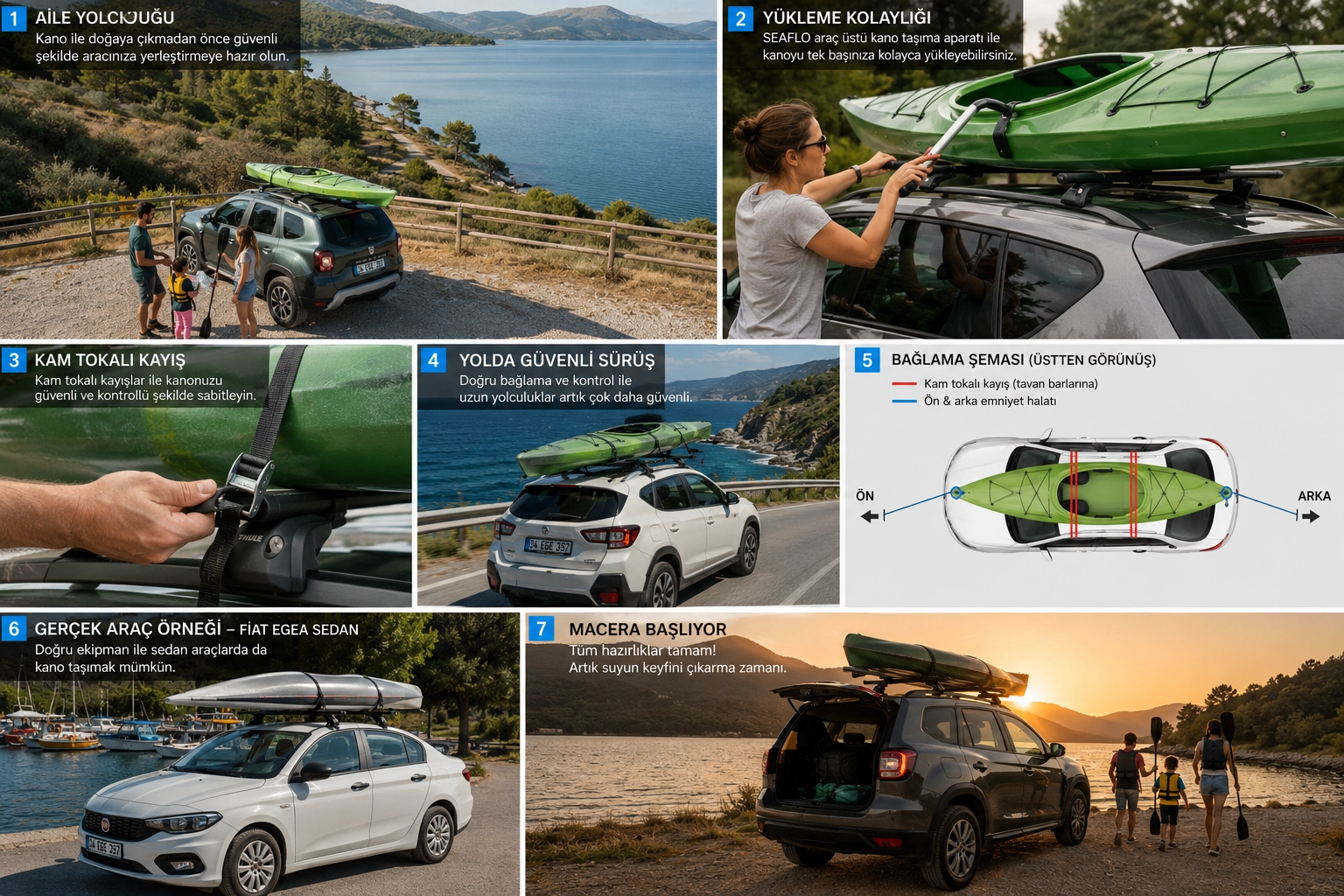
💡 Denizciden Expert Tip
Instead of sliding your kayak directly across your vehicle during loading, use a dedicated loading assistant to protect your vehicle's paintwork and minimize the risk of damaging the kayak hull.
The SEAFLO Car Roof Kayak Loading Assistant features a powerful suction mounting system and a soft EVA protective surface, making solo kayak loading safer, faster, and much more convenient.
First Time Transporting a Kayak?
If this is your first time transporting a kayak on your vehicle, perform a short test drive before beginning a long journey. After the first 10–15 kilometers (or 5–10 miles), stop in a safe location and recheck all straps and tie-down points.
A properly secured kayak should remain stable with very little independent movement, allowing you to travel confidently on both local roads and highways.
In Part 2 of this guide, we'll explain how to position your kayak correctly on the roof rack, how to use cam buckle straps properly, when bow and stern tie-downs are necessary, and the step-by-step process for securing your kayak safely for any journey.
How Should You Position a Kayak on Your Vehicle?
The first step to transporting a kayak safely is positioning it correctly on your roof rack. Proper placement helps distribute the load evenly, reduces wind resistance, and improves stability while driving.
Most hard-shell kayaks are transported upside down (cockpit facing downward) on roof crossbars. This allows the strongest part of the hull to rest on the rack while helping reduce aerodynamic drag. However, some kayak manufacturers recommend alternative transportation methods for specific models, so it's always a good idea to consult your owner's manual.
The kayak should be centered between the front and rear crossbars, allowing its weight to be evenly distributed across the roof rack system.
Can You Load a Kayak by Yourself?
Yes. With the right equipment and proper technique, one person can safely load a kayak onto a vehicle without assistance.
Loading longer or heavier kayaks can be challenging, which is why many paddlers use roof loading assistants that support the kayak while it is being lifted and slid into position. This helps prevent accidental scratches on both the vehicle and the kayak.
💡 Denizciden Expert Tip
If you regularly load your kayak alone, a dedicated loading assistant can make the process significantly easier while protecting your vehicle's paintwork.
The SEAFLO Car Roof Kayak Loading Assistant features a durable suction mounting system and a soft EVA protective surface, allowing one person to load a kayak safely with greater control.
How Do You Secure a Kayak to Roof Racks?
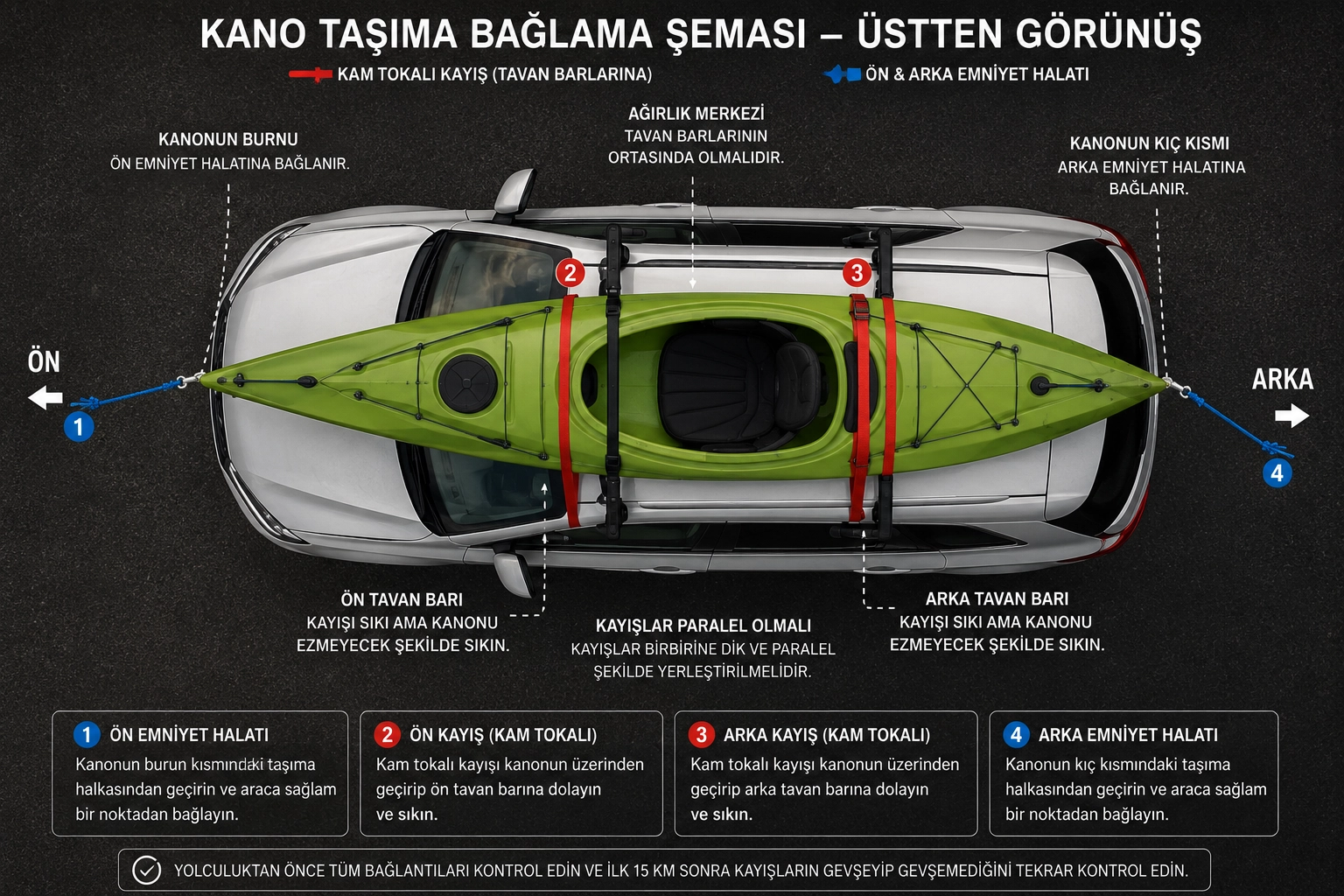
Once the kayak is properly positioned, it should be secured using high-quality cam buckle straps. These straps provide excellent holding strength without applying excessive pressure that could damage the kayak's hull.
For the safest installation, follow these steps:
- Place the kayak evenly on both roof crossbars.
- Use one cam buckle strap for each crossbar.
- Wrap each strap completely around the crossbar and over the kayak.
- Tighten the straps firmly without overtightening.
- Secure any loose strap ends to prevent them from flapping while driving.
- For longer kayaks, add bow and stern tie-down lines.
After tightening the straps, gently shake the kayak from side to side. The kayak should move together with the vehicle, not independently.
Cam Buckle Straps or Ratchet Straps?
Professional paddlers generally recommend cam buckle straps for transporting kayaks because they provide excellent holding power while reducing the risk of damaging the hull.
| Strap Type | Advantages | Recommendation |
|---|---|---|
| Cam Buckle Straps | Easy to tighten with controlled pressure | ⭐⭐⭐⭐⭐ Recommended |
| Ratchet Straps | Very high tightening force | ⚠ Use with caution |
Ratchet straps can easily apply too much pressure, potentially deforming plastic or composite kayak hulls. Unless specifically recommended by the kayak manufacturer, cam buckle straps are generally considered the safer option.
When Should You Use Bow and Stern Tie-Downs?
Bow and stern tie-down lines are highly recommended when transporting longer kayaks, driving at highway speeds, or traveling long distances.
These additional tie-downs help stabilize the kayak by reducing forward, backward, and side-to-side movement caused by strong winds or sudden braking.
- ✔ Recommended for highway driving.
- ✔ Adds extra stability on long trips.
- ✔ Helps reduce movement during crosswinds.
- ✔ Especially beneficial for kayaks over approximately 4 meters (13 feet) long.
Denizciden Expert Recommendation
Experienced kayakers rarely rely solely on roof straps. Adding bow and stern tie-downs provides an extra level of security, especially during long highway journeys or in windy conditions. This simple precaution can greatly improve transportation safety.
In Part 3 of this guide, we'll cover safe driving tips, how transporting a kayak affects fuel economy, the most common transportation mistakes, frequently asked questions, and practical recommendations for different vehicle types.
Safe Driving Tips When Transporting a Kayak
Even if your kayak is properly secured, driving with roof-mounted equipment requires additional care. A kayak changes your vehicle's aerodynamics, making it more sensitive to crosswinds, sudden braking, and high-speed travel.
Before starting your journey, inspect every strap and tie-down point. After driving approximately 10–15 kilometers (or 5–10 miles), stop in a safe location and check all connections again. During longer road trips, repeat these inspections regularly.
- 🚗 Accelerate and brake smoothly.
- 🛑 Avoid sudden lane changes whenever possible.
- 🌬 Slow down during strong crosswinds.
- 🔍 Check your straps at every fuel or rest stop.
- 📏 Pay attention to parking garages, low bridges, and height restrictions.
Does Carrying a Kayak Increase Fuel Consumption?
Yes. Like any roof-mounted cargo, a kayak increases aerodynamic drag, especially at highway speeds. This may lead to higher fuel consumption and additional wind noise.
You can minimize these effects by following a few simple recommendations:
- ✔ Avoid unnecessary high speeds.
- ✔ Position the kayak as evenly as possible on the roof rack.
- ✔ Remove roof racks or carriers when they are not in use.
- ✔ Secure loose strap ends to reduce wind noise.
A properly mounted kayak not only improves safety but can also reduce unnecessary drag during long-distance travel.
Common Kayak Transportation Mistakes
Many transportation problems are caused by simple mistakes that are easy to avoid. Following proper loading procedures helps protect both your equipment and everyone on the road.
- ❌ Using only one strap to secure the kayak.
- ❌ Overtightening straps and deforming the hull.
- ❌ Leaving loose strap ends flapping in the wind.
- ❌ Ignoring the vehicle's maximum roof load capacity.
- ❌ Skipping bow and stern tie-downs for longer kayaks.
- ❌ Never checking strap tension during long trips.
- ❌ Dragging the kayak across the vehicle while loading.
Frequently Asked Questions (FAQ)
Can I transport a kayak in the rain?
Yes. Rain itself is not a problem as long as the kayak is properly secured. After your trip, it's recommended to rinse and dry both the kayak and transportation equipment before storage.
Can I drive on highways with a roof-mounted kayak?
Absolutely. A properly secured kayak can be safely transported on highways. However, inspect your straps regularly during long journeys and always follow local traffic regulations.
Can I enter a parking garage with a kayak on my roof?
Be careful. A roof-mounted kayak significantly increases your vehicle's overall height. Always check clearance signs before entering parking garages, tunnels, or low structures.
Can an inflatable kayak also be transported on the roof?
Yes. However, one of the biggest advantages of an inflatable kayak is that it can be deflated and transported inside the vehicle, which many paddlers prefer for long-distance travel.
Can one person load a kayak alone?
Yes. With proper lifting techniques and a quality loading assistant, one person can safely load and secure a kayak without needing additional help.
Denizciden Expert Recommendation
Safe kayak transportation isn't just about tightening straps. Choosing quality equipment, distributing the load evenly, and inspecting your tie-downs throughout the journey are equally important.
If you frequently transport your kayak alone, investing in a dedicated loading assistant can make loading easier while protecting both your vehicle and your kayak from unnecessary damage.
With the right equipment and a consistent loading routine, transporting your kayak becomes simple, safe, and enjoyable—allowing you to focus on the adventure ahead.
Recommended Transportation Methods by Vehicle Type
| Vehicle Type | Suitable for Kayaks | Recommendation |
|---|---|---|
| Sedan | ✅ Yes | Use quality crossbars and two cam buckle straps. |
| Hatchback | ✅ Yes | Excellent for recreational kayaks. |
| SUV | ⭐⭐⭐⭐⭐ | Offers one of the most stable roof transportation platforms. |
| Station Wagon | ⭐⭐⭐⭐⭐ | Ideal for longer touring kayaks. |
| Pickup Truck | ⭐⭐⭐⭐⭐ | Can transport kayaks on the roof or in the truck bed. |
| Minivan | ⭐⭐⭐⭐⭐ | Perfect for family trips and carrying multiple kayaks. |
Final Thoughts
Transporting a kayak safely doesn't have to be complicated. With the right roof rack, quality cam buckle straps, proper loading techniques, and regular safety checks, you can confidently travel to lakes, rivers, and coastlines wherever your next adventure takes you.
Spending just a few extra minutes securing your kayak properly before each trip can protect your equipment, improve road safety, and provide complete peace of mind throughout your journey.
Related Articles
- 🛶 How to Maintain a Kayak
- 🏄 Kayak vs SUP: Which One Should You Choose?
- 🎒 Essential Kayak Accessories
- 🛟 Kayaking Safety Guide
- 🌊 Beginner's Guide to Kayaking

Discover the SEAFLO Car Roof Kayak Loading Assistant
Make solo kayak loading safer, easier, and more convenient with the SEAFLO Car Roof Kayak Loading Assistant. Designed to help protect both your kayak and your vehicle during loading, it's an excellent solution for paddlers who frequently travel alone.
🚗 Explore the SEAFLO Kayak Loading Assistant
🛶 Denizciden Academy
At Denizciden Academy, we publish expert guides covering kayaks, SUP boards, Sea Scooters, marine equipment, and water sports to help you choose the right gear and enjoy every adventure safely.
Whether you're buying your first kayak or planning your next outdoor journey, our educational articles, maintenance tips, transportation guides, and equipment recommendations are designed to help you make informed decisions and get the most out of your time on the water.