🏄 Inflatable SUP Board vs Hard SUP Board: Which One Should You Choose? (2026 Comprehensive Guide)
One of the most frequently asked questions by those interested in SUP (Stand Up Paddle) is undoubtedly "Inflatable SUP Board or Hard SUP Board?". For first-time SUP buyers, this choice can sometimes be quite confusing.
Both types of SUP have their own unique advantages, usage areas, and performance characteristics. The right choice varies depending on your intended use, experience level, storage and transport options, and sporting expectations.
In this comprehensive guide, we will compare inflatable and hard SUP models in all aspects and explain in detail which model is more suitable for which user.
🏄 Browse SUP Board Models at Denizciden
Why is SUP Board Selection So Important?
SUP board selection is not just about price or appearance. The water environment you will use, your transport method, storage space, and sporting goals play a decisive role in choosing the right board.
A wrongly chosen SUP board can;
- Cause you to expend more energy.
- Make balancing difficult.
- Reduce your paddling performance.
- Challenge you during transport and storage.
- Fail to provide the expected comfort of use.
Therefore, it is necessary to know the differences between the two technologies well before making a purchase decision.
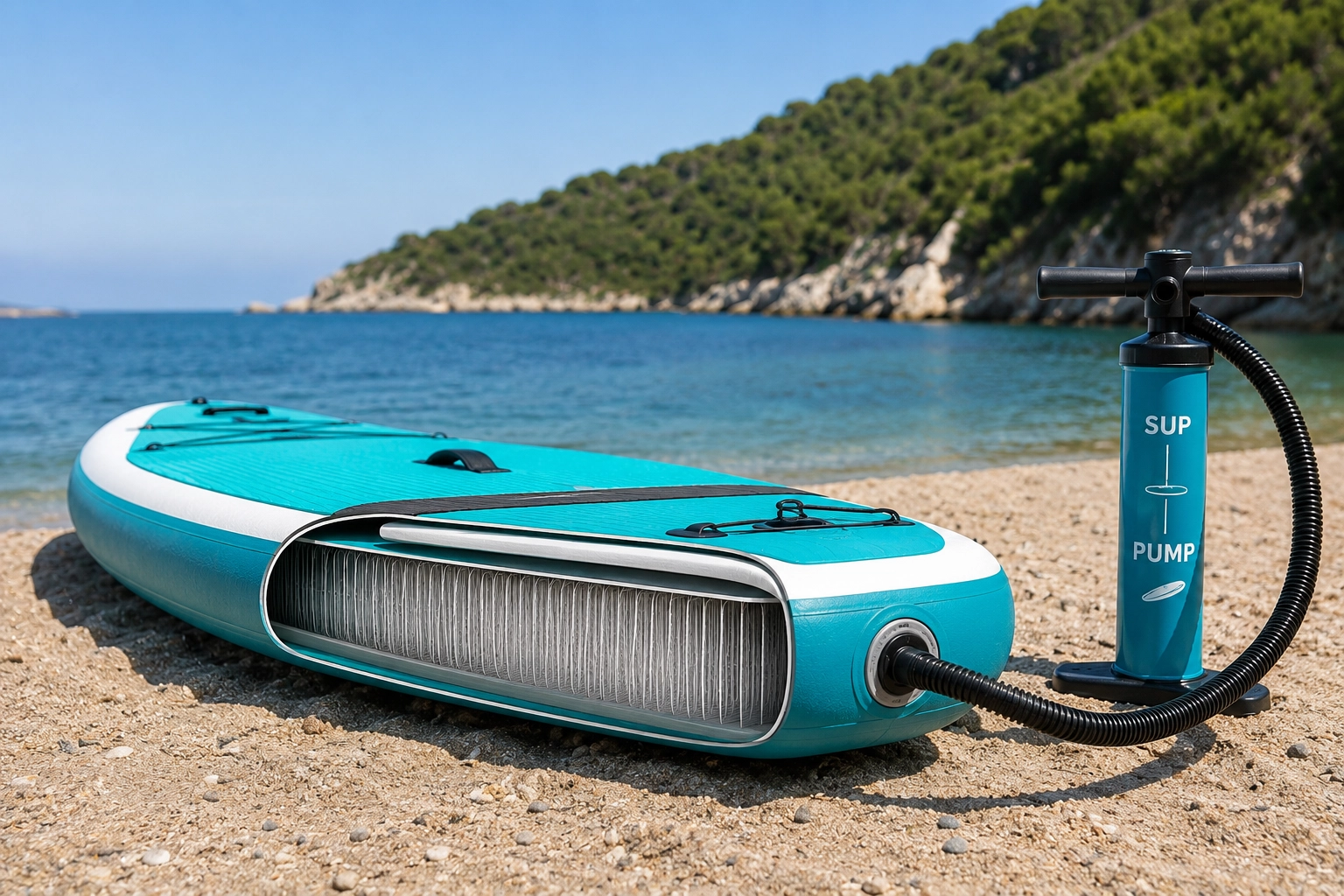
What is an Inflatable SUP Board?
Inflatable SUP boards are modern SUP boards manufactured using high-pressure resistant Drop Stitch technology, inflated with air.
Thanks to thousands of polyester threads in their internal structure, they maintain their form even under high air pressure and create a very robust structure.
When a quality inflatable SUP board is inflated to the correct PSI value, it becomes surprisingly rigid and feels as secure as a hard board to many users.
Advantages of Inflatable SUP Boards
- Can be folded to fit into a small carry bag.
- Easily transported in the trunk.
- Can be conveniently stored in apartments.
- More resistant to impacts and collisions.
- Very safe for beginners.
- Provides great convenience for travel.
- Ideal for boat, caravan, and yacht users.
Disadvantages of Inflatable SUP Boards
- Needs to be inflated before use.
- May not be suitable for racers demanding very high performance.
- Lower quality models may exhibit flex.
- Initial setup can take a few minutes.
💡 Expert Comment from Denizciden
The majority of SUP boards sold today are inflatable models. Especially in terms of portability, ease of use, and safety, it is one of the most practical solutions for beginner users.
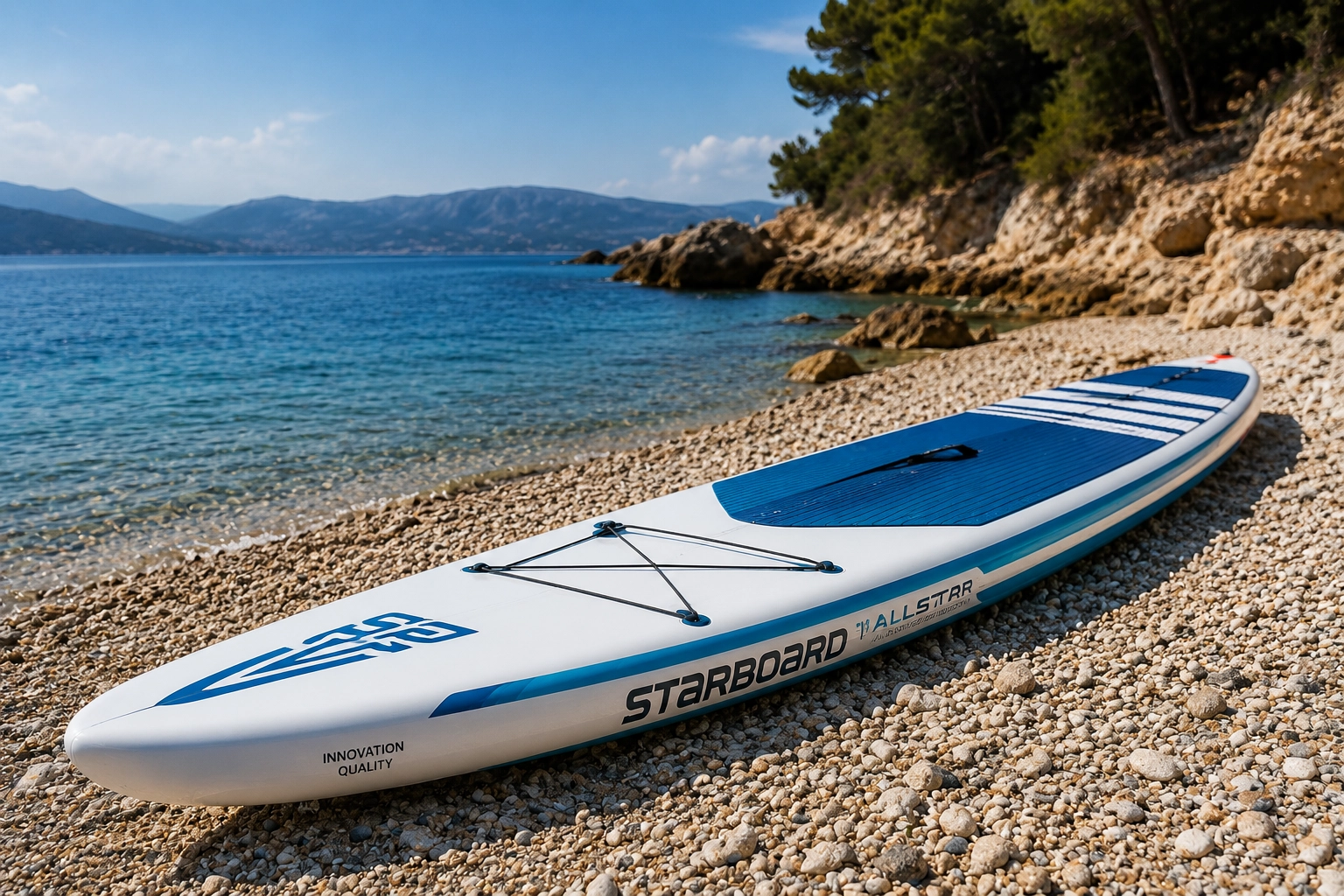
What is a Hard SUP Board?
Hard SUP boards are classic SUP models manufactured from fiberglass, epoxy, carbon fiber, or similar composite materials.
They are considered the SUP type that offers the highest efficiency in professional racing and performance-oriented use.
Because they have a one-piece hull structure, they behave more rigidly on the water and are preferred by users seeking maximum speed.
Advantages of Hard SUP Boards
- Provides maximum performance on the water.
- Offers higher speed.
- Transfers paddle strokes more efficiently.
- Ideal for professional races.
- Offers high maneuverability.
Disadvantages of Hard SUP Boards
- More difficult to transport.
- Requires storage space.
- Repair is more costly upon impact.
- May require a vehicle roof rack system.
- More cumbersome to use during travel.
Key Differences Between Inflatable SUP and Hard SUP
| Comparison | Inflatable SUP | Hard SUP |
|---|---|---|
| Portability |