What Is a Danger Flag? The Meaning, History, Development, and Modern Importance of Danger Flags in Maritime Safety
In maritime safety, protection often depends on signals that can be noticed within seconds and interpreted the same way by everyone. This is exactly where the concept of the danger flag comes into play. Although many people think of a danger flag as a single flag, the subject is far broader in maritime terms. At sea, danger, distress calls, restricted areas, severe weather, hazardous water conditions, and emergencies have historically been communicated through different visual signals. These signals have sometimes taken the form of a flag, sometimes a flag combination, sometimes a shape, and sometimes red flares or other visual warning devices.
For this reason, the correct answer to the question “what is a danger flag” should not be limited to the definition of a single object. The real issue is understanding why such a signal was needed, which historical necessities led to its development, how it became standardized in maritime practice, and why it still remains essential today. Because a danger flag is not just a simple piece of fabric; it is a shared language of safety designed to protect human life.
What Is a Danger Flag?
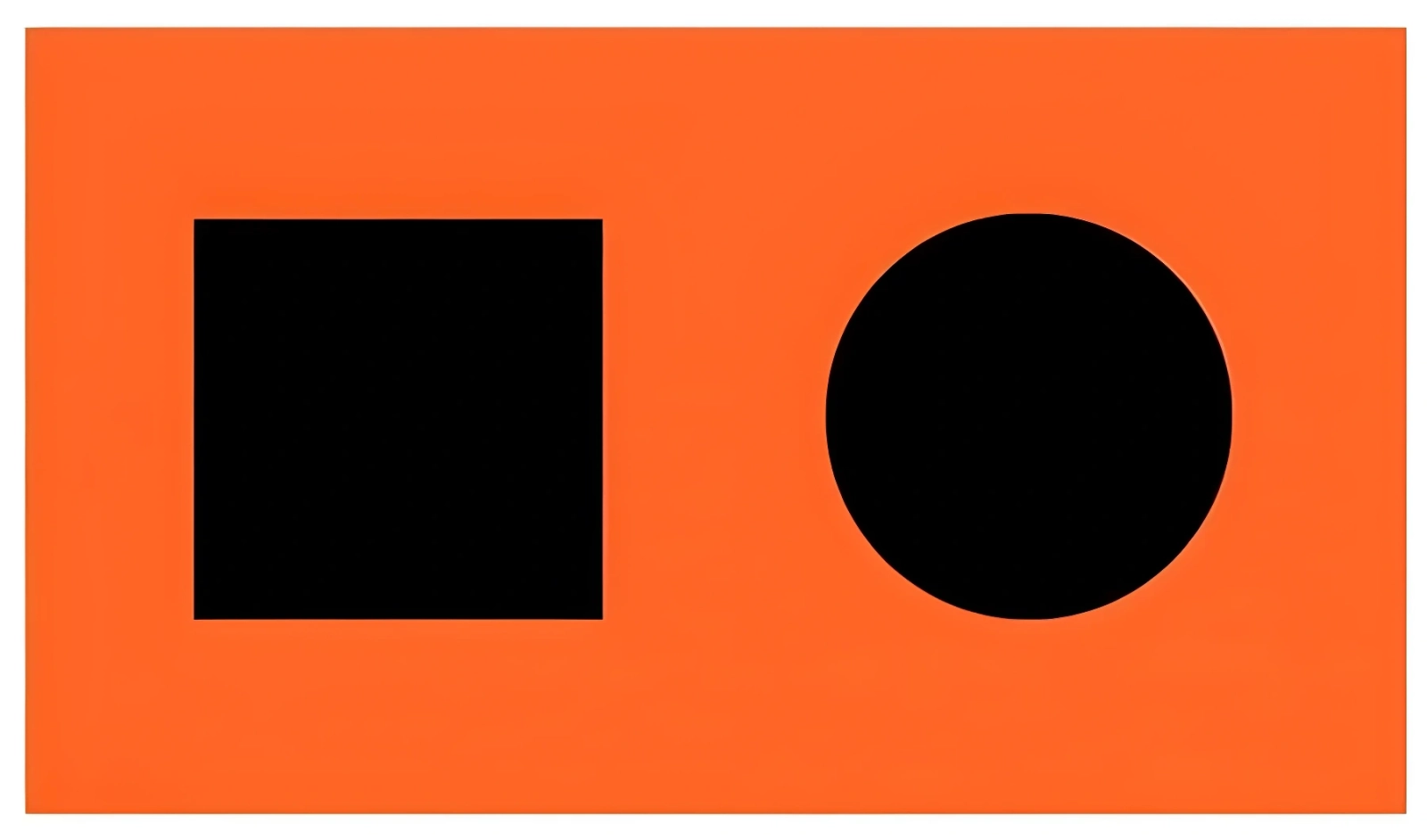
In the simplest terms, a danger flag is a visual warning signal indicating that there is a risk, restriction, emergency, or need for assistance in a given area. However, in maritime practice, this concept cannot be reduced to a single fixed symbol. In everyday language, what is called a “danger flag” is often discussed in seamanship under headings such as distress signals, international code flags, danger signals, and visual warning systems.
From a technical standpoint, there is no single universal “danger flag” that has exactly the same meaning in every maritime context. Instead, there are various signals defined by international rules and used according to the situation. A vessel requesting help on the open sea is not the same as a red flag on a beach indicating that entering the water is prohibited. Yet both share the same purpose: to make approaching danger visible.
Why Did the Danger Flag Emerge?
The main reason behind the emergence of danger flags was the fact that communication at sea has historically been difficult and limited. On land, people in danger can shout, run, or reach help over relatively short distances. At sea, however, the situation is very different. Vessels are often far apart, weather conditions may be severe, the sound of wind and waves can make communication difficult, fog can reduce visibility, and sailors from different nations may not speak the same language.
Under these conditions, signals that could be recognized from a distance and understood without relying on language became essential. Everyone needed to understand in the same way whether a ship was on fire, aground, in need of help, unable to maneuver, or operating in a dangerous area. Over time, this need transformed flags from mere symbols of identity or affiliation into life-saving signaling tools.
In other words, the danger flag is the natural result of the need for visual communication, the uncertainties of the sea, and the necessity of protecting human life from afar. Without such a system, every distress call at sea would be far more open to chance and misunderstanding.
Why Was There a Need for Danger Flags?
The need for danger signals at sea did not arise solely from a lack of communication. The deeper reason was the need to prevent misunderstanding. A captain using a signal that was valid in one country might be interpreted differently by a vessel from another country. In critical situations such as distress calls, that kind of confusion could have fatal consequences.
For this reason, the maritime world gradually developed common symbols, standardized flags, and international rules. The goal was very clear: even if people could not speak the same language in a moment of danger, they had to be able to understand the same signal. This principle remains one of the foundations of maritime safety today.
In addition, danger flags do not always mean only “I need help.” In some contexts, they may also mean “there is serious danger here,” “keep away,” “it is dangerous to enter the water,” “an operation is underway,” or “this area is not safe.” This makes danger signals essential not only for ships, but also for ports, coastlines, beaches, and water sports areas.
The Development of the Danger Flag from History to the Present
1. Early maritime history: the birth of visual warning
In the early periods of maritime history, communication between ships was extremely limited. During the age of sail, a ship often had to approach another vessel in order to explain what was happening, or it had to develop methods that could be noticed from a distance. Fire, smoke, cannon shots, torches, signal shapes, and flags all became important for this reason. Fast warning was especially vital in cases of war, storms, fire, collision, and grounding.
At that time, signals were not as systematic as they are today. Yet the core need was the same: “Notice me, something is wrong.” That way of thinking later formed the basis for the establishment of international maritime signaling systems.
2. From the age of sail to steamships: the growth of risk
By the 19th century, maritime traffic accelerated, trade expanded, and more people began traveling by sea. As the number of ships increased, the importance of danger signals became even greater. This was no longer just a matter of a few lost ships on the open sea; it involved regular trade routes, passenger vessels, and heavily traveled sea lanes.
During this period, the need for international rules regarding maritime safety became much more evident. The use of different signaling systems by different countries posed a serious risk to global shipping. A common standard was necessary.
3. 1857 and the process of international standardization
One of the major turning points in maritime history was the introduction of the International Code of Signals in 1857. This development ensured that signals at sea were no longer used randomly, but according to a defined logic and standard. As a result, visual communication began to move beyond local practices and evolve into an international language.
This standardization was extremely important. A signal made by one vessel had to be understood in exactly the same way by a vessel from another country. Defining signal codes for danger, distress, maneuvering, warnings, and communication became one of the cornerstones of maritime safety.
4. The Titanic disaster of 1912 and the transformation of safety culture
Although maritime signaling had already begun to develop earlier, the Titanic disaster of 1912 and the international regulations that followed took maritime safety to an entirely different level. The sinking of the Titanic painfully demonstrated how vital distress signaling, lifesaving equipment, emergency procedures, and international safety standards truly were.
The SOLAS approach that developed afterward made it clear that safety at sea could not be left to goodwill alone. As a result, danger signals became part of a much broader safety system. The issue was no longer merely whether a flag could be seen, but whether that signal could be correctly understood within the entire emergency response chain.
5. The beginning of the radio, SOS, and MAYDAY era
With the spread of radio systems, distress calls at sea no longer depended only on visual signals. SOS, and later the radio call MAYDAY, along with other radio-based distress systems, significantly strengthened maritime safety. However, this did not make danger flags obsolete.
On the contrary, maritime safety became multi-layered. A vessel may lose electrical power, its radio may fail, its antenna may be damaged, or communication range may be limited. For this reason, visual signals continued to exist not as alternatives to electronic systems, but as their complements.
6. The modern era: GMDSS and the continued use of visual signals
In modern maritime operations, the GMDSS, or Global Maritime Distress and Safety System, has brought distress and safety communications to a much more advanced level. Satellite systems, radio, digital alerts, and automated emergency systems now play major roles. Even so, visual distress signals and the underlying logic of danger flags remain important.
This is because the fundamental principle of maritime safety is simple: no single system should ever be trusted on its own. Distress calls must be capable of being transmitted in multiple ways. That is why danger flags and other visual signals still retain their value today.
Main Signals Commonly Confused with the Danger Flag in Maritime Use
The N.C. flag combination
In international maritime rules, one of the recognized distress signals is the N.C. flag combination. This signal indicates that the vessel is in serious danger and requires assistance. In everyday language, people often imagine a single flag when they hear “danger flag,” but in maritime practice the meaning may sometimes be conveyed through a combination of flags.
The square flag and sphere-shaped signal
One of the historically known visual distress signals in maritime practice is the combination of a square flag with a sphere-like shape. Such visual signals were among the classic methods developed to indicate a need for help from a distance. For ships without radio equipment in earlier times, these symbols were extremely important.
Red visual distress signals
The color red has long been associated with danger and urgency. In maritime use, red parachute flares, red hand flares, and similar visual signals are therefore highly recognizable. This long-standing association is also why many people instinctively equate the idea of a “danger flag” with the color red.
The red danger flag on beaches
One of the most commonly seen examples of a danger flag in everyday life is the red flag used on beaches. This flag generally indicates that it is dangerous to enter the water because of currents, waves, weather conditions, or other safety concerns. In some places, a double red flag means that entering the water is completely prohibited.
Although this use differs from a ship’s distress signals, the logic is the same: to communicate danger at a glance and encourage people to stay back.
What Does a Danger Flag Do?
The main function of a danger flag is to make risk visible. In maritime contexts, that visibility is extremely important. The sooner danger is noticed, the faster the response can be. These flags and signals make it possible to call for help, mark hazardous areas, announce that entering the water is prohibited, warn nearby vessels, and build safety awareness.
In addition, the danger flag provides order, discipline, and standardization. A maritime environment in which everyone used signals according to their own preference would create chaos. A standardized language of danger signals allows captains, coast guard personnel, and sea users to understand the same thing in the same way.
What Would Happen Without Danger Flags?
If danger flags and similar visual warning systems had never developed, requesting help at sea would be far more difficult. Especially before the radio era, the result would often have been accidents discovered too late, ships that could not be reached, and greater loss of life. Even today, relying only on electronic systems is not sufficient. The absence of visual signals creates a serious gap in emergency management.
Moreover, danger signals are important not only for a single ship, but also for public safety. If no red flag is raised on a beach during strong waves and currents, people may enter the water without realizing the risk. If a danger signal is absent at an operational site, unnecessary approaches may occur. In short, a danger flag is the visible, fast, and understandable form of warning.
The Psychological Importance of the Danger Flag in Maritime Safety
A danger flag is not merely a technical signal; it also has a strong psychological effect. The human eye reacts quickly to signs that are clear, high-contrast, and visually distinct. This is why flags, signs, and red-dominant warnings are highly effective in communicating danger. In maritime contexts, this effect is even more important, because sometimes decisions must be made in only a few seconds.
The moment a captain, shore official, or swimmer sees a danger signal, they usually become alert almost instinctively. This contributes greatly to the success of safety systems. In other words, a danger flag does not only provide information; it also guides behavior.
Why Is the Danger Flag Still Important Today?
Although technology has advanced enormously, the sea remains an unpredictable environment. Electricity can fail, equipment can malfunction, signals can weaken, operator errors can occur, and systems often need to support one another. For that reason, visual warning tools still remain important today.
A danger flag may seem like a low-technology device, but in reality it offers high reliability. It does not require complex energy systems to be used. Under suitable conditions it can be seen from a distance, and with proper training it can be interpreted very quickly. That is why even modern maritime operations have not completely abandoned traditional signals.
Where Are Danger Flags Used?
- On ships and boats: for distress calls, danger warnings, and emergency signaling
- On beaches: to indicate that entering the water is dangerous or prohibited
- At ports and coastal facilities: to mark operational risks or safety boundaries
- In water sports areas: to indicate currents, waves, and activity zones
- In security and search-and-rescue operations: to signal caution, keep-away zones, or emergency conditions
The SEO Value of the Danger Flag Topic
The topic of danger flags is highly valuable for maritime enthusiasts, boat owners, yacht users, those interested in coastal safety, and people searching for information about beach safety. This is because the subject is not merely theoretical; it is directly connected to human life, safety awareness, and maritime culture.
For this reason, search queries such as “what is a danger flag,” “what does a red flag mean,” “what is a distress flag at sea,” “why are danger signals used,” and “what are maritime distress signals” carry strong organic traffic potential. A well-prepared article can both inform readers and create long-term SEO value for maritime-focused websites.
Conclusion
The short answer to the question what is a danger flag is this: it is a visual signal used to indicate danger, risk, restriction, or the need for assistance. But from a maritime perspective, the real answer goes much deeper. The danger flag is part of a safety culture shaped over centuries. From the earliest visual warnings to international signal codes, from post-Titanic safety reforms to modern GMDSS systems, the same core need has always existed: to communicate danger quickly and accurately.
For that reason, the danger flag is not just a historical symbol. It is one of the simplest yet most effective tools of safety in marine and coastal environments. It helps people see danger in time, make the right decisions, and protect human life. That is why the danger flag was important in the past, remains important today, and will continue to retain its importance in the future.
Frequently Asked Questions
Is a danger flag a single universal flag?
No. In maritime practice, there is no single universal danger flag used alone in every situation. Depending on the circumstances, different distress signals, code flags, and visual warning devices are used.
What is a danger flag used for at sea?
At sea, it is used to communicate danger, distress, restrictions, or hazardous conditions quickly and from a distance.
What does a red flag mean?
On beaches, a red flag generally means that entering the water is dangerous. In some places, a double red flag means that entering the water is completely prohibited.
Why is a danger flag important?
Because it provides a standardized visual warning system that can be understood quickly in dangerous situations. This speeds up response and improves safety.
Are danger flags still necessary when modern systems exist?
Yes. Modern radio and satellite systems are extremely important, but visual signals remain critical backup and complementary safety tools in maritime operations.