What Is an Electric Anchor Windlass? Advantages, Disadvantages & Complete Buying Guide (2026)
Anchoring is one of the most important aspects of safe boating. Whether you're cruising along the coastline, spending the night in a quiet bay, or enjoying a day of fishing, having a reliable anchoring system is essential for both safety and comfort.
For many boat owners, retrieving a heavy anchor and chain manually can be physically demanding, especially on medium and large vessels. This is where an electric anchor windlass becomes one of the most valuable pieces of equipment on board.
If you've already read our guide "What Is an Anchor Windlass?", you already know that a windlass is designed to deploy and retrieve your anchor safely. In this article, we'll focus specifically on electric anchor windlasses, explaining how they work, their advantages and disadvantages, and how to choose the right model for your boat.
⚓ Explore Electric Anchor Windlasses at Denizciden
What Is an Electric Anchor Windlass?
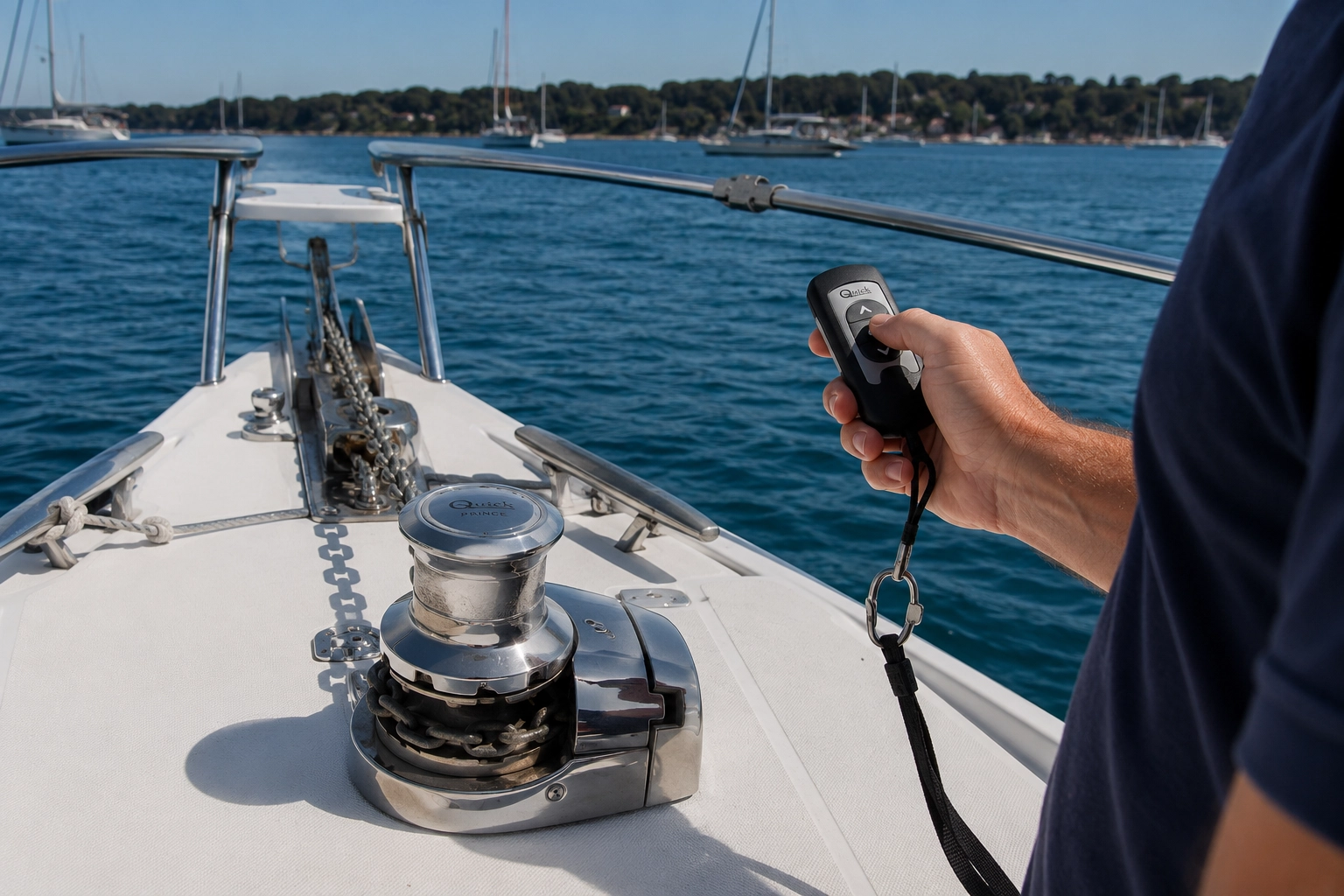
An electric anchor windlass is a powered anchoring system that uses an electric motor to deploy and retrieve your boat's anchor and chain. Instead of manually pulling heavy ground tackle aboard, the windlass performs the work safely, quickly, and with minimal physical effort.
Modern electric windlasses have become standard equipment on many cruising boats, sailing yachts, motor yachts, fishing boats, and offshore vessels because they significantly improve both safety and convenience.
With the simple press of a button, foot switch, or remote control, the entire anchoring process becomes smoother and much more controlled.
How Does an Electric Anchor Windlass Work?
An electric windlass operates using a high-torque DC motor connected to a gearbox. The gearbox transfers power to a specially designed chain wheel (commonly called a Gypsy) that grips the anchor chain and moves it in either direction.
When the operator activates the control switch:
- The electric motor begins rotating.
- The gearbox multiplies torque.
- The gypsy engages the chain.
- The anchor can be lowered smoothly into the water.
- Or retrieved safely back onto the bow.
Many premium models also support multiple control methods, allowing operation from different areas of the boat.
Common Control Options
- Foot Switch Controls
- Helm Control Panel
- Wired Remote Control
- Wireless Remote Control
- Chain Counter Displays
- Smart Boat Integration (selected models)
These features make anchoring easier, especially when boating short-handed or operating in changing weather conditions.
Main Components of an Electric Windlass
Although designs vary between manufacturers, most electric windlasses include the following components:
- High Torque DC Motor
- Gearbox / Reduction Gear
- Gypsy (Chain Wheel)
- Drum (on combination models)
- Main Shaft
- Solenoid Control Unit
- Circuit Breaker or Fuse
- Deck Switches
- Control Relay
- Marine Grade Stainless Steel Housing
Each component plays an important role in delivering reliable and controlled anchoring performance.
Advantages of an Electric Anchor Windlass
1. Effortless Anchor Retrieval
Retrieving a heavy anchor manually can quickly become exhausting. An electric windlass removes almost all of the physical effort involved, making anchoring far easier for boat owners.
2. Improved Safety
Controlled deployment and retrieval reduce the risk of sudden chain release, accidental injuries, and equipment damage.
3. Single-Handed Operation
Many boaters cruise alone or with a small crew. Electric windlasses allow one person to safely manage the entire anchoring process without assistance.
4. Faster Anchoring
Anchors can be deployed and recovered much faster than manual systems, saving valuable time when changing anchorages or reacting to weather conditions.
5. Reduced Wear on Equipment
Consistent motor-driven operation helps reduce unnecessary stress on the anchor chain, bow roller, and anchoring hardware.
💡 Denizciden Expert Tip
If your boat is longer than approximately 23 feet (7 meters), an electric anchor windlass is one of the best upgrades you can make. It not only improves comfort but also makes anchoring significantly safer, particularly when boating with a small crew.
Who Should Use an Electric Anchor Windlass?
Electric windlasses are highly recommended for:
- Motor Yacht Owners
- Sailing Yacht Owners
- Fishing Boats
- Cruising Boats
- Catamarans
- Weekend Boaters
- Long-Distance Cruisers
- Single-Handed Sailors
- Anyone Using Heavy Anchor Chain
If your boat regularly anchors overnight, carries a heavier anchor, or frequently changes locations, an electric windlass can dramatically improve your overall boating experience.
⚓ Browse Our Electric Anchor Windlass Collection
Coming up in Part 2: We'll compare the advantages and disadvantages of electric windlasses, explain the differences between 12V and 24V systems, discuss motor power selection, chain compatibility, and provide expert advice on choosing the right windlass for your vessel.
Are There Any Disadvantages to an Electric Anchor Windlass?
Although electric anchor windlasses have become essential equipment on many modern boats, no piece of marine equipment is perfect. Understanding both the advantages and the limitations will help you make a smarter purchasing decision.
Fortunately, most potential drawbacks can be minimized through proper installation, routine maintenance, and selecting the correct windlass for your boat.
1. Depends on Your Boat's Electrical System
Unlike manual windlasses, electric models rely on your boat's battery system. A weak battery, undersized wiring, or poor electrical connections can reduce performance or prevent the windlass from operating correctly.
2. Higher Initial Investment
Electric windlasses cost more than manual systems and usually require professional installation. However, the additional convenience, safety, and long-term reliability often justify the investment.
3. Requires Routine Maintenance
Like any marine mechanical system, an electric windlass should be inspected regularly. Keeping the motor, gearbox, electrical connections, and gypsy clean and properly maintained ensures reliable operation for years.
⚠️ Denizciden Expert Advice
Most windlass failures are not caused by manufacturing defects. Instead, they result from poor electrical installation, incorrect cable sizing, neglected maintenance, or corrosion. Proper installation significantly increases reliability.
12V vs 24V Electric Anchor Windlass
One of the most common questions boat owners ask is whether to choose a 12V or a 24V electric windlass.
The answer depends primarily on your boat's existing electrical system and the size of your vessel.
| 12 Volt Windlass | 24 Volt Windlass |
|---|---|
| Ideal for small and medium-sized boats | Recommended for larger yachts and commercial vessels |
| Lower installation cost | Greater power efficiency |
| Most common recreational setup | Lower current draw under heavy loads |
| Easier battery configuration | Better suited for continuous heavy-duty use |
Always match your windlass voltage to your vessel's electrical system. Converting between voltages can be expensive and is rarely practical.
Choosing the Right Windlass Motor Size
Selecting the correct motor size is just as important as choosing the right windlass model.
Motor power should be determined based on several factors:
- Boat length
- Boat displacement
- Anchor weight
- Chain length
- Expected anchoring frequency
| Boat Length | Recommended Motor Power |
|---|---|
| 16–23 ft (5–7 m) | 500–700 W |
| 23–30 ft (7–9 m) | 700–1000 W |
| 30–40 ft (9–12 m) | 1000–1500 W |
| 40 ft+ (12 m+) | 1500 W and above |
Note: These figures are general recommendations. Always verify the manufacturer's specifications before purchasing.
Why Chain Compatibility Matters
Your windlass is designed to work with specific chain sizes and chain standards. The gypsy must precisely match the dimensions of your anchor chain.
Using an incompatible chain may cause:
- Chain slipping
- Premature gypsy wear
- Motor overload
- Chain jams
- Unsafe anchoring operations
Before purchasing a new windlass, always verify your chain diameter and chain specification.
What to Consider Before Buying an Electric Windlass
- ✅ Boat Length
- ✅ Boat Weight (Displacement)
- ✅ Anchor Weight
- ✅ Chain Diameter
- ✅ Chain Length
- ✅ 12V or 24V Electrical System
- ✅ Motor Power
- ✅ Stainless Steel Construction
- ✅ Spare Parts Availability
- ✅ Manufacturer Reputation
- ✅ Warranty & Service Support
💡 Denizciden Expert Tip
Don't choose an electric windlass based solely on price. Consider build quality, corrosion resistance, motor performance, service support, and compatibility with your anchoring system. A properly selected windlass will provide dependable performance for many years.
⚓ Explore Electric Anchor Windlasses
Coming up in Part 3: We'll cover maintenance tips, safety recommendations, frequently asked questions, and expert advice to help you maximize the performance and lifespan of your electric anchor windlass.
How to Maintain an Electric Anchor Windlass
An electric anchor windlass operates in one of the harshest marine environments, constantly exposed to saltwater, moisture, UV rays, and heavy mechanical loads. Regular maintenance is essential not only for extending the life of your windlass but also for ensuring safe anchoring every time you head out on the water.
A well-maintained windlass will perform more reliably, reduce unexpected failures, and help protect your anchor, chain, and electrical system.
After Every Trip
- Rinse the windlass thoroughly with fresh water.
- Wash salt deposits from the anchor chain and gypsy.
- Inspect the chain for smooth movement.
- Check for visible damage or loose fasteners.
- Allow the system to dry before covering it.
Seasonal Maintenance
- Inspect electrical cables and terminals.
- Check battery voltage and charging performance.
- Examine the gearbox for unusual noise or vibration.
- Inspect the gypsy for excessive wear.
- Test the circuit breaker and solenoid.
- Lubricate moving components according to the manufacturer's recommendations.
💡 Denizciden Expert Tip
If your boat is used frequently throughout the boating season, schedule a complete inspection of your electric windlass at least once a year. Preventive maintenance is far less expensive than emergency repairs.
Safety Tips When Operating an Electric Windlass
Electric windlasses generate significant pulling force. Following basic safety procedures helps prevent injuries and equipment damage.
- ⚓ Keep hands and fingers away from the moving chain.
- ⚓ Never wear loose clothing near rotating components.
- ⚓ Ensure no one is standing near the anchor chain while operating the windlass.
- ⚓ Monitor battery voltage before heavy use.
- ⚓ Avoid running the windlass continuously under excessive load.
- ⚓ Release the control switch immediately if the chain jams.
- ⚓ Keep children away from the operating area.
- ⚓ Always verify that the anchor is securely locked before getting underway.
Frequently Asked Questions
Does an electric windlass drain the battery?
Electric windlasses draw a high current only while operating. With a properly sized battery bank and correctly installed wiring, normal use should not significantly affect your boat's electrical system.
Can an electric windlass be operated manually?
Many models include a manual emergency override, allowing the anchor to be raised or lowered if electrical power is unavailable. Check the specifications of your chosen model for this feature.
What size boat needs an electric windlass?
Although any boat can benefit from an electric windlass, they become especially valuable on vessels over 23 feet (7 meters), where anchors and chain systems are considerably heavier.
How long does an electric windlass last?
A high-quality electric windlass that receives regular maintenance can provide reliable service for many years. Its lifespan depends on usage frequency, maintenance, environmental conditions, and installation quality.
What is the most important factor when choosing a windlass?
The correct windlass should match your boat length, displacement, anchor weight, chain size, electrical system, and intended boating style. Proper sizing is the key to long-term reliability.
Electric Windlass Buying Checklist
- ✔ Confirm your boat length.
- ✔ Check your boat displacement.
- ✔ Verify anchor weight.
- ✔ Measure your chain diameter.
- ✔ Check chain length.
- ✔ Confirm your electrical system (12V or 24V).
- ✔ Select the correct motor power.
- ✔ Choose marine-grade corrosion-resistant materials.
- ✔ Verify warranty and spare parts availability.
- ✔ Buy from a trusted marine equipment supplier.
Explore Electric Anchor Windlasses at Denizciden
Whether you're upgrading your current anchoring system or equipping a new boat, Denizciden offers a wide range of high-quality electric anchor windlasses suitable for different boat sizes and cruising requirements.
Our collection includes:
- 12V Electric Anchor Windlasses
- 24V Electric Anchor Windlasses
- Vertical Windlasses
- Horizontal Windlasses
- Marine Grade Stainless Steel Models
- Windlasses compatible with various chain sizes
⚓ Shop Electric Anchor Windlasses
Conclusion
An electric anchor windlass is one of the most valuable upgrades you can make to improve safety, convenience, and efficiency on board. It transforms the anchoring process into a faster, easier, and far less physically demanding task.
Choosing the right windlass requires careful consideration of your boat's size, anchor weight, chain specifications, electrical system, and cruising habits. Investing in a properly matched, high-quality windlass will provide dependable performance for years to come.
With routine maintenance and proper installation, your electric anchor windlass will become one of the most reliable systems on your boat.
⚓ Denizciden Expert Recommendation
Don't choose a windlass based solely on price. Focus on quality, corrosion resistance, technical compatibility, and after-sales support. The right electric anchor windlass is an investment in both safety and peace of mind every time you leave the dock.
Related Guides
- ⚓ What Is an Anchor Windlass?
- ⚓ Vertical vs Horizontal Windlass: Which One Should You Choose?
- ⚓ How to Choose the Right Anchor Windlass
- ⚓ Electric Windlass Maintenance Guide
- ⚓ 12V vs 24V Windlass: Which Is Better?
⚓ Denizciden Academy
Discover expert guides on anchoring systems, marine equipment, and boating safety. At Denizciden Academy, we help boat owners make informed decisions with practical advice, technical insights, and in-depth buying guides.
Follow our Academy for more professional articles covering anchor windlasses, anchoring systems, marine electronics, and essential boating equipment.